 Soggiorna
In Alassio the food is Ligurian, but with a few recipes you won't find outside the town. The Comune has listed about twenty of them under the De.Co. label, a municipal designation that ties a product to its place, and at least one, the baci, has become the town's symbol. This guide tells you what to look for and where it comes from; we don't recommend restaurants, because we haven't tried them all.
The baci di Alassio
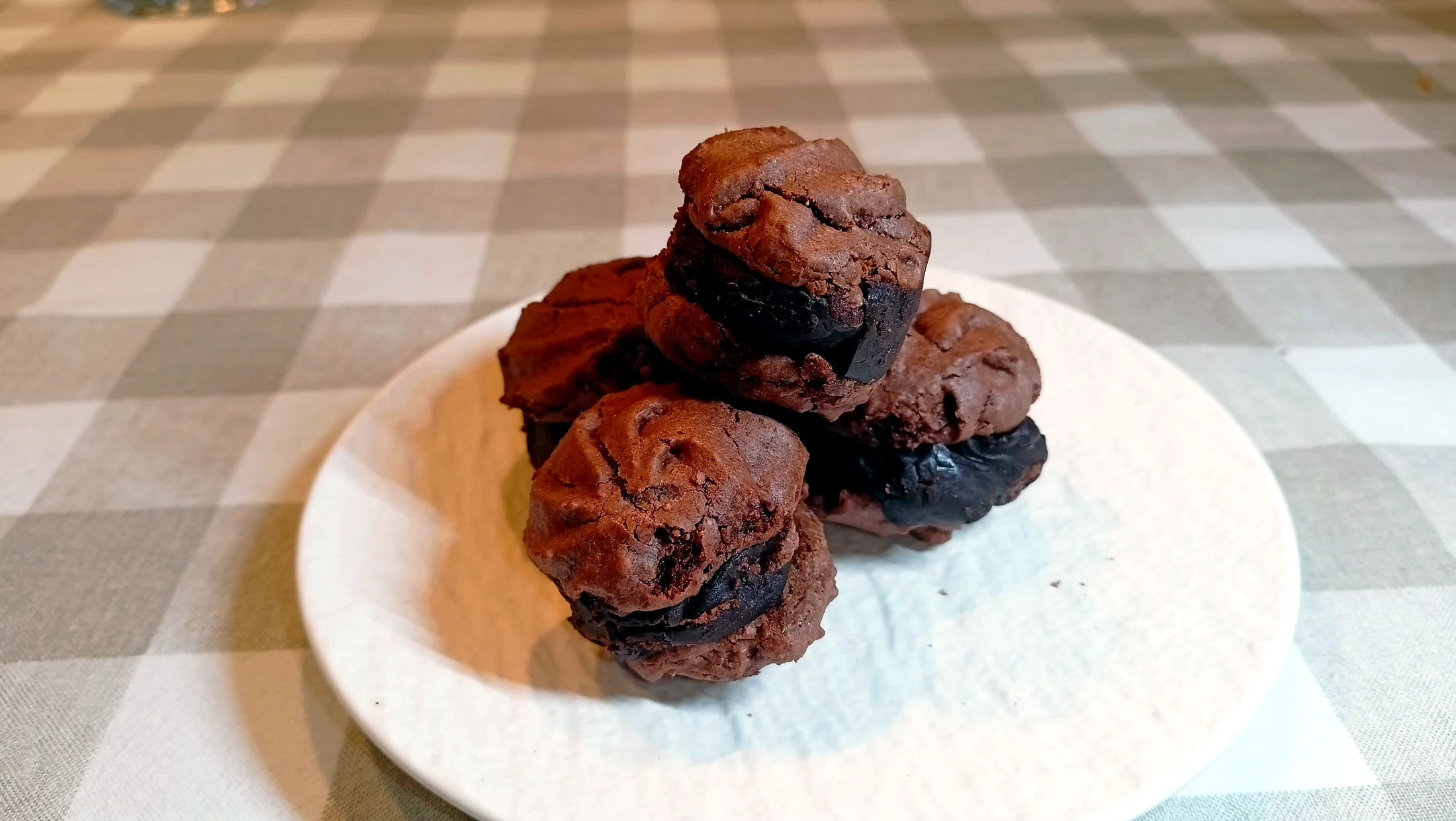
Two soft hazelnut, cocoa and honey biscuits held together by a chocolate cream. They were invented at the Balzola pastry shop, at Piazza Matteotti 26, and the family tells the story itself: in 1902 Pasquale Balzola took over an inn in what was then Piazza del Commercio, and in 1919 his son Rinaldo created and patented the baci. You will also see 1910 online, but the date confirmed by the pastry shop is 1919.
The baci have the De.Co., the designation with which the Comune di Alassio recognises products tied to the town. It is a municipal label, not to be confused with the European PDO (DOP), which the baci don't have. And they are a recipe all Alassio's own: the shape recalls the Piedmontese baci di dama, but the dough and filling are different.
You can still buy them at Balzola today, by weight or in boxes: they are the gift to take home.
The De.Co. dishes
The Comune's tourism website lists the products with the municipal label, with their stories. The ones to look for on menus and in delis:
- Ventre: the dish of the "tonnarotti", the tuna fishermen of the hill village of Moglio: dried tuna tripe stewed with potatoes, tomatoes, pine nuts and herbs.
- Sardene cine: Ligurian stuffed sardines, in the Regione Fenarina version, with breadcrumbs soaked in milk, chard, marjoram, parmesan and egg, then breaded and fried.
- Anciue frite e tumatetta: floured fried anchovies, served with a sauce of tomato, onion and basil cooked slowly.
- Mugnarelle: fritters of finely chopped vegetables that change with the season: trombetta courgettes, red onions and courgette flowers in summer; pumpkin, borage and leeks in winter.
- Machetto: an anchovy paste pounded in a mortar with salt, oil and butter, born so as not to waste the fish caught up in the nets. Eaten on toast.
- Acciugotto: the street-food version of Ligurian anchovies, with a pesto of parsley, capers, bread and vinegar.
Among the other traditional recipes the Comune mentions borage ravioli, trofie al pesto and focaccia.
Sweets beyond the baci
- Biscette: snake-shaped sweet fritters with fennel or anise seeds and lemon zest, tied to a legend from the village of Solva.
- Frisciöi de mèira: apple fritters from Borgo Coscia, made for the Borgo's festival that remembers the victory over Saracen pirates in the 1500s.
- Galletta di Santa Caterina: a round biscuit of flour, sugar and lard flavoured with fennel, once handed out to the faithful by the confraternity of Santa Caterina.
- Pane del marinaio: a sweet bread made to last on long sea voyages, more delicate than the Genoese version.
- Gumeletti di Borgo Barusso: little shortcrust pastries shaped like a hat, filled with apricot jam.
- Pajette de fighe secche: dried figs wrapped in their own leaves with bay and wild fennel, to keep for a long time.
Begonia sorbet
The most unusual item on the list. Begonias are one of Alassio's emblematic flowers, and the town's ice-cream makers have turned them into a water-based sorbet, colourful and slightly tart. There is also a Moglio fig sorbet, made with figs from the hill. The Comune presents them as specialities of Alassio's gelato makers: you'll find them in ice-cream shops in the centre, but not all of them make them, and not all year.
Oil, vegetables and the amaro
- Riviera Ligure PDO extra virgin olive oil is the everyday cooking oil. Among the De.Co. products there is also an oil from the Taggiasca cultivar, "U Re" oil.
- Vegetables come from the Albenga plain, a few kilometres away: asparagus, artichokes, oxheart tomatoes and trombetta courgettes.
- Amaro dei Saraceni is made with forty herbs left to infuse for forty days.
The wines of the Ponente
The Comune's tourism website presents the local wines, and the map is simple:
- Pigato: the dry white of the Albenga area, the one most tied to this stretch of coast;
- Vermentino, the other white of the Riviera di Ponente, and Lumassina from the Savona area;
- Rossese Riviera Ligure di Ponente DOC, also called "di Campochiesa", not to be confused with Rossese di Dolceacqua, which in 1972 became Liguria's first DOC wine;
- Granaccia, a red from the Savona area, and Ormeasco from the hills behind Imperia;
- Moscato, also as a passito, which goes perfectly with the baci.
The December fair
The easiest way to taste everything in one day is the Fiera De.Co., which the Comune holds every year around 7 December. In 2026 it is on 6 and 7 December in Piazza Airaldi e Durante, from 11am to 7pm; in bad weather it moves to 8 December.
Frequently asked questions
Who invented the baci di Alassio?
According to the Balzola pastry shop, Rinaldo Balzola, who created and patented them in 1919 in the family shop in Piazza Matteotti.
Do baci di Alassio have a quality label?
Yes, the De.Co., the municipal designation recognised by the Comune di Alassio. They are not a European DOP or IGP product.
What is Alassio's typical dish?
Dishes with the municipal label include Moglio tuna ventre, stuffed sardines, fried anchovies with tumatetta and mugnarelle fritters. The best-known product is still the bacio.
What wine should I drink in Alassio?
Pigato, the white of the Albenga area. Among the reds, Rossese from the Riviera Ligure di Ponente.
Where can I taste all the De.Co. products?
At the Fiera De.Co., every year around 7 December in Piazza Airaldi e Durante.