 Soggiorna
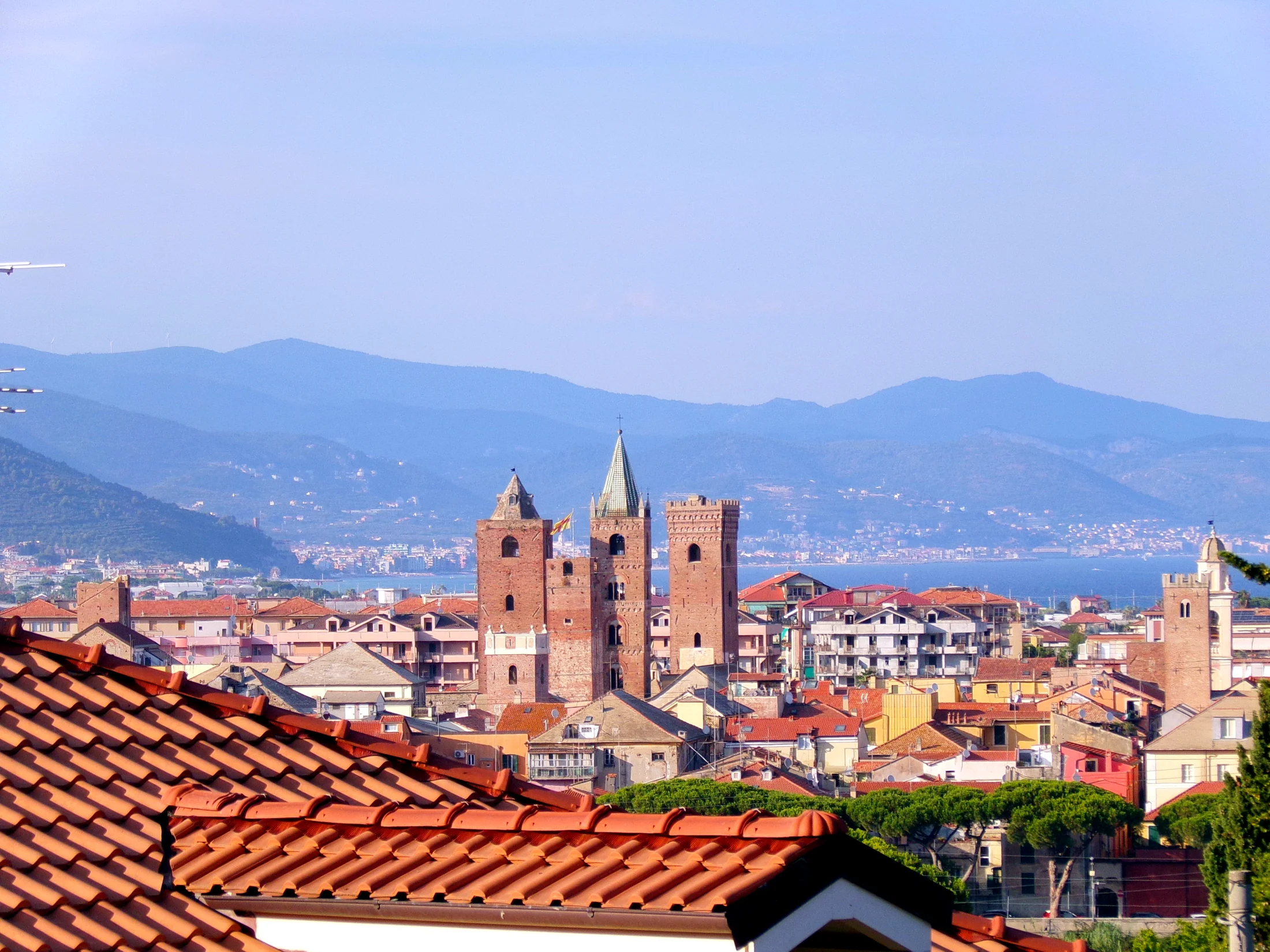
Albenga is one of the most complete destinations on the Riviera di Ponente: in a single day, you can combine a historic center rich in Roman and medieval heritage, museums clustered within just a few blocks, and a seaside walk with views of Gallinara Island. The best visit starts from Piazza San Michele, continues among towers and narrow alleys (caruggi), and ends along the promenade.
What to see in Albenga in one day
For a first visit, it’s advisable to dedicate the morning to the historic center, early afternoon to the museums, and the last part of the day to the coast. Distances within the old town are short, but it’s better not to overpack the schedule: the charm of Albenga also lies in stopping at small squares and observing the buildings without rushing.
Piazza San Michele and the medieval towers
Piazza San Michele is the most effective starting point. Here, several key monuments converge: the Cathedral of San Michele Arcangelo, the Old Palace (Palazzo Vecchio), the Civic Tower (Torre Civica), and other buildings that tell the city’s historical role.
Albenga is often associated with its towers, which rise above the rooftops of the center and have earned it the nickname "city of a hundred towers." There’s no need to follow a rigid route: from Piazza San Michele, you can walk along Via Enrico d’Aste and turn into the side alleys, where portals, loggias, arches, and medieval facades appear.
The Early Christian Baptistery
Next to the Cathedral stands the Baptistery, one of the places not to miss. The exterior may seem simple, but the interior preserves an Early Christian structure with a decagonal plan and significant mosaic decorations. It’s a brief visit, but it gives meaning to the entire itinerary because it shows how much Albenga’s history predates its more evident medieval appearance.
Opening hours, tickets, and access methods may change throughout the year. Before setting off, it’s useful to check the official tourism website or contact the information office.
Piazzetta dei Leoni and Via Bernardo Ricci
From the Baptistery, you easily reach Piazzetta dei Leoni, one of the most recognizable corners of the center. Nearby, Via Bernardo Ricci retains the layout of the medieval city, with houses, arcades, and architectural details worthy of a slow stroll.
This part of Albenga is suitable even for those who don’t want to enter every museum: the urban path alone offers a clear reading of the historic city.
Which museums to choose
Albenga has several cultural spaces close together. In a single day, it’s more realistic to choose one or two.
Roman Naval Museum
The Roman Naval Museum, housed in Palazzo Peloso Cepolla, tells the story of Albenga’s relationship with the sea and preserves artifacts related to ancient navigation. It is the most coherent choice for those wanting to understand the city’s Roman phase and the role of maritime trade.
Civic Museum and other cultural spaces
The center also hosts the Civic Museum and other exhibition venues. Offerings and opening hours are not always identical in every season, so it’s worth checking which locations are open on the day of your visit. For a balanced day, it’s better to visit one museum thoroughly than to rush through all collections.
From the historic center to the sea
After the cultural visit, you can reach the coastal area and walk along the promenade. Facing the city, you can spot Gallinara Island, a nature reserve and one of the symbols of the Ingauno territory.
Albenga’s beaches are a good conclusion on warm days, but the sea shouldn’t be considered only a summer alternative. Even out of season, the coastal walk offers space, light, and a different perspective compared to the center’s alleys.
Sea excursions and activities around Gallinara depend on operators, weather, permits, and time of year. It’s best to book only after verifying conditions and services actually available.
What to eat in Albenga
The agricultural plain behind the city is known for four typical products: thistle artichoke, violet asparagus, ox-heart tomato, and trombetta zucchini. Local menus and shops also feature oil, Pigato wine, and Ligurian vegetable-based preparations.
There’s no need to look for a restaurant with an endless list of dishes. A simple seasonal proposal, built with local products, is often the best way to connect the historical visit to Albenga’s agricultural reality.
Albenga without a car
Albenga is served by the railway, and the center can be explored on foot. Those arriving by train should check the route between the station, historic center, and promenade in advance, especially if traveling with young children or luggage.
A car is useful for continuing inland, but it’s not essential for the urban visit. To continue your journey along the coast, you might consider Finale Ligure and Finalborgo, the itinerary between Noli and Varigotti, or an organized holiday along the Riviera di Ponente by train.
How much time to dedicate
A few hours suffice for the historic center alone, but a full day allows you to add a museum, lunch break, and the sea. With two days, you can evaluate a coastal activity or a trip to the surroundings, without compressing all visits into the same afternoon.
Recommended itinerary
- Morning: Piazza San Michele, Cathedral, Baptistery, and towers.
- Late morning: Via Bernardo Ricci and Piazzetta dei Leoni.
- Early afternoon: Roman Naval Museum or another open museum.
- End of day: Promenade, beach, and view of Gallinara.
When to go
Spring and early autumn are suitable periods for combining walks and cultural visits. In summer, it’s advisable to enter the historic center during the cooler hours and leave the sea for the afternoon. In winter, the city is quieter, but some services may observe reduced hours.
Frequently asked questions
Is Albenga worth visiting?
Yes, especially for those looking for a Ligurian destination that isn’t just about bathing. The historic center, Baptistery, towers, and museums offer enough content for a complete day.
Is it easy to visit on foot?
The historic center is compact and lends itself well to pedestrian visits. However, to link the center, station, and sea, it’s still useful to check distances and routes before arrival.
Is Albenga or Alassio better?
They are different experiences. Albenga focuses more on history, archaeology, and museums; Alassio is more linked to the beach, the Budello shopping street, and tourist tradition. The two locations can be combined in the same stay.