 Soggiorna
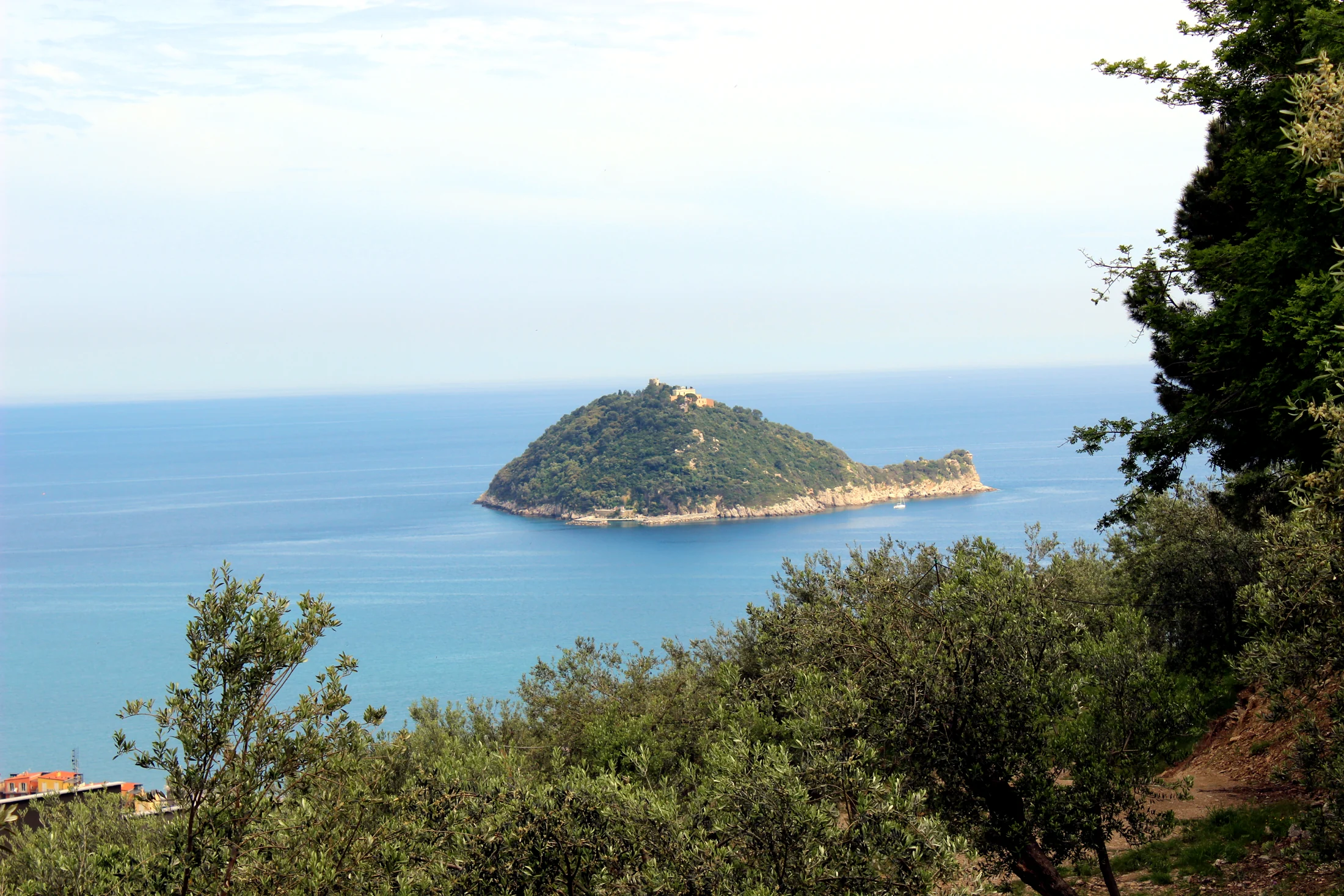
Alassio's finest walk is not on the seafront but a hundred metres or so higher up, on the road the Romans built between 13 and 12 BC on the orders of Augustus. The Via Iulia Augusta links Alassio and Albenga above the cliffs, through olive trees, pines and two-thousand-year-old tombs, with Gallinara island in front of you all the way. It is easy, takes half a day, and at the end you come back by bus or train.
The route at a glance
According to the Comune di Alassio's tourism website, the stretch from Santa Croce to the outskirts of Albenga is 4.5 km long, is rated easy and takes about 95 minutes of walking, which with stops easily becomes two hours. The highest point is at 111 metres.
The Comune di Albenga describes the same path in the opposite direction and as a round trip: from the centre of Albenga to Santa Croce and back is about 10-11.5 km, with 273 metres of total ascent. The two figures don't contradict each other: the starting point is different, and one of them includes walking back.
The surface is mixed: tarmac, packed earth and a short stretch of ancient paving in the shade of downy oaks. Trainers with a good sole are enough.
Where it starts: Santa Croce
You start from the Santa Croce car park, above the centre of Alassio, in front of the small Romanesque church of Santa Croce. According to the Comune di Albenga it was built in the 11th century by Benedictine monks from nearby Gallinara island. Next to it is the stone arch the writer Cecil Roberts called "the portal to paradise", and under the pines there is a drinking fountain: fill your bottle here.
What you pass along the way
- Sant'Anna ai Monti, an old chapel on the route. It is closed by gates and cannot be visited; sources disagree on when it was founded.
- The Roman necropolis of Albingaunum, Roman Albenga: funerary monuments from the 1st and 2nd centuries AD lined up along the road, as was the custom outside towns. Among them is a columbarium from the mid-1st century, which the Comune di Alassio describes as the only one of its kind found so far in Liguria.
- The Pilone, at Punta San Martino: a tower-shaped funerary monument from the 2nd century AD.
- The Roman amphitheatre, reached by a short detour. It stands on private land.
- The Colombera, a 16th-century residence, and a chapel from 1929 dedicated to those lost at sea.
Tree spurge (Euphorbia arborea) grows along the path. It is a toxic shrub: don't touch it, and warn children beforehand.
Where it ends and how to get back
The path comes down a small paved road, the Salita Madonna di Fatima, and ends on the southern outskirts of Albenga, at the junction with Via San Calocero. Albenga's old town is a short walk from there.
To get back to Alassio you have two options:
- the TPL bus: line 40 links every town on the coast from Andora to Finale Ligure, with day and evening services every 30 minutes;
- the train from Albenga station, which in Alassio arrives a few steps from the centre.
Many people do it the other way round: train or bus to Albenga, then walk back towards Alassio with the sea in front of them the whole time.
Water, heat and the best season
According to the Comune di Albenga, the only two fountains on the route are near the sanctuary of Nostra Signora di Fatima and at the church of Santa Croce. There is nothing in between: in summer take at least a litre of water each and a hat.
The same Comune recommends spring and autumn, because in many stretches the trees give little shade. In summer, set off early in the morning or in the late afternoon.
The path can almost all be ridden on a mountain bike, with short sections where you have to push. It is narrow and busy, though: take it calmly, not running and not with earphones in.
Gallinara island, seen from the path
All along the walk, ahead of you, is Gallinara: eleven hectares of Mediterranean scrub between Alassio and Albenga, a protected natural area of the Liguria Region. The name comes from the wild hens (galline) that lived there in Roman times, as Varro and Columella recorded.
Its history in a few lines:
- between 356 and 360 AD Saint Martin withdrew here as a hermit, fleeing Milan during the Arian persecutions, and on the west side there is a cave where he is thought to have sheltered;
- in the Middle Ages a wealthy Benedictine abbey stood here, the one the monks of Santa Croce came from;
- the tower dates from the 16th century and was built by the Genoese; the neo-Romanesque chapel is from the early 20th century;
- in 1866 the island was sold to private owners, and it is still privately owned today.
You cannot land on the island. It is not open to visitors, to protect its environment. You can get close on boat trips run by private operators, without mooring.
The rest of the story is underwater. In 1950 a Roman cargo ship was found around the island, and its amphorae are kept in the Roman Naval Museum in Albenga, which is currently closed to the public. Since 29 September 1998 a statue of Christ the Redeemer has stood 18 metres down. Diving is only allowed with guides from the approved dive centres, because there are unexploded wartime devices and a wreck on the seabed.
Frequently asked questions
How long is the Via Iulia Augusta from Alassio to Albenga?
The Comune di Alassio gives 4.5 km from Santa Croce to the southern outskirts of Albenga, about 95 minutes' walk. The round trip from the centre of Albenga is about 10-11.5 km.
Is it difficult?
No, it is rated easy. There are short climbs, the highest point is at 111 metres, and the surface is partly tarmac, partly dirt. The real problem in summer is the heat and the lack of shade.
Where does it start in Alassio?
At the Santa Croce car park, in front of the Romanesque church of Santa Croce, above the centre.
How do I get back to Alassio from Albenga?
By TPL bus line 40, which runs every 30 minutes, or by train from Albenga station.
Can you visit Gallinara island?
No. The island is private and protected, and is not open to visitors. You can see it up close on boat trips, without landing, and diving is only possible with the approved dive centres.
Is there water along the way?
Only two fountains: at the church of Santa Croce and near the sanctuary of Nostra Signora di Fatima, on the Albenga side. There is no water in between.