 Soggiorna
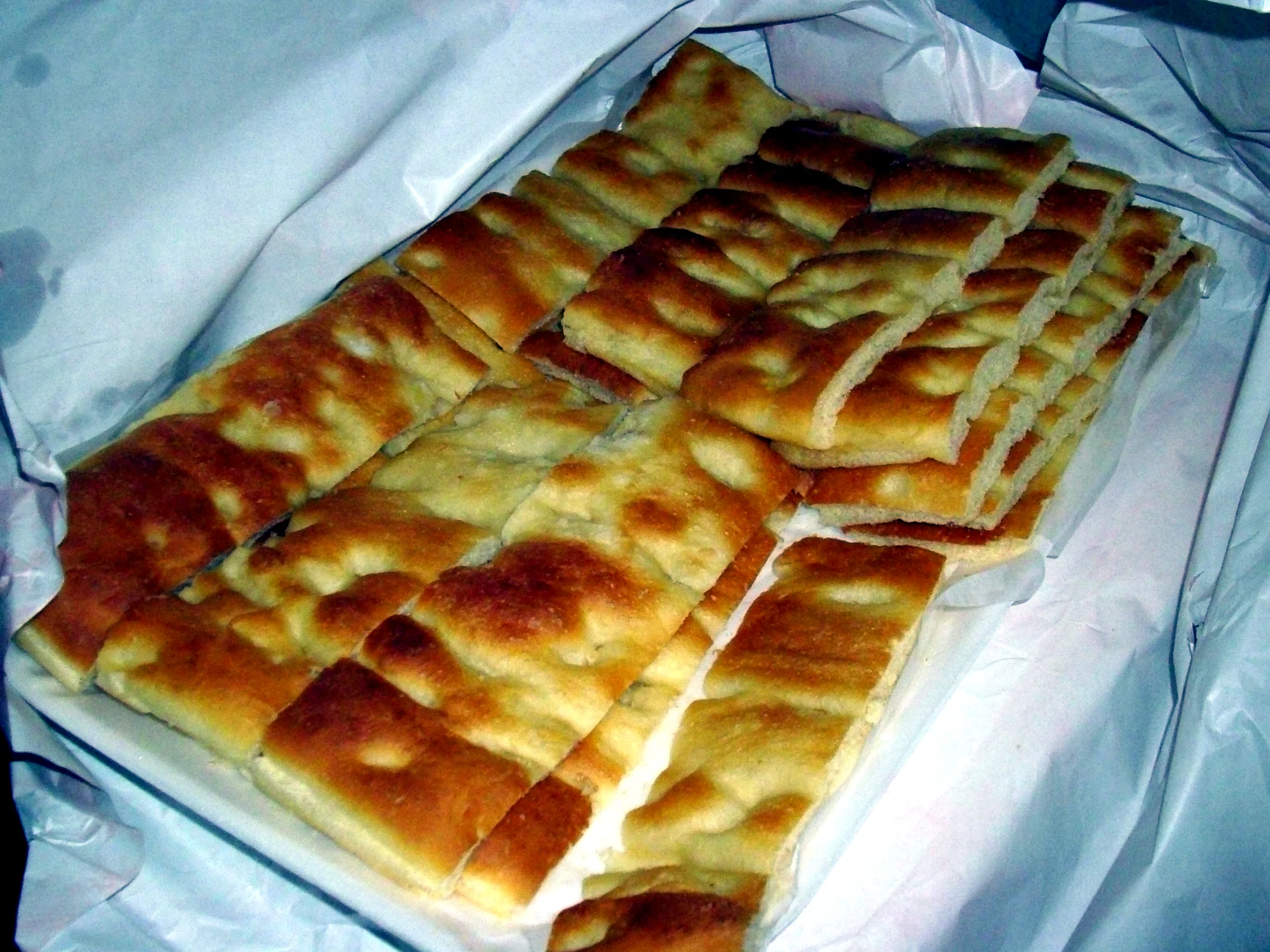
In Genoa at least half of eating happens on foot. Focaccia is bought at the counter and eaten in the street, farinata comes hot out of the wood oven, and an afternoon in the old lanes often ends with a paper cone in your hand. The other half is home cooking: hand-made pasta, vegetables, herbs, and a sauce the whole world knows, pesto.
Focaccia
Genoese focaccia, fügassa in dialect, is low, soft inside and golden outside, with the dimples left by fingers and olive oil pooling on top. People here eat it at any hour, breakfast included, and some dip it in their cappuccino. Besides the classic version, bakeries make it with onions, olives or rosemary.
Focaccia di Recco col formaggio is something else: two paper-thin sheets of dough with soft cheese in between. It has been a PGI since 2015, and the name can only be used for focaccia made around Recco, half an hour from Genoa by train.
Pesto
Pesto genovese is an uncooked sauce, traditionally made in a mortar. The Consortium's rules list its ingredients:
- Genoese basil PDO, at least 25 per cent;
- extra virgin olive oil;
- Parmigiano Reggiano or Grana Padano, and pecorino;
- garlic, pine nuts and sea salt; walnuts are optional.
It goes with trofie, small twisted pasta, with trenette or with mandilli, thin sheets of pasta whose name means "handkerchiefs". Potatoes and green beans are often cooked with the pasta.
Farinata and panissa
Farinata is a thin cake of chickpea flour, water, oil and salt, baked in large copper pans in a wood oven. It is served in wedges, piping hot, with black pepper. The same shops sell panissa, also made from chickpeas: a polenta left to set, cut into sticks and fried.
Home cooking
- Pansoti, ravioli filled with herbs and cheese, dressed with walnut sauce.
- Ravioli al tocco, with a slow-cooked meat sauce.
- Cima, a pocket of veal stuffed and boiled, served cold in slices.
- Torta pasqualina, a savoury pie of chard and cheese with whole eggs inside.
- Minestrone alla genovese, with pesto stirred in at the end.
- Cappon magro, a cold layered salad of fish and vegetables: the dish of feast days.
- Buridda, a fish stew from the seafaring tradition.
Sweets
Genoa's sweet is pandolce, pandoçe: a sweet bread with raisins, candied fruit and pine nuts, scented with orange blossom. It is made for Christmas, but many bakeries have it all year round.
Among the city's historic shops is the Pietro Romanengo confectioner's on piazza Soziglia, open since 1814: candied fruit, sugared almonds and chocolate in a shop that has barely changed.
Where to taste
The old town still has many friggitorie, bakeries and sciamadde, the old cooked-food shops, especially around via San Luca, piazza Banchi and via di Sottoripa. The rule is simple: go in where the oven is lit and people are queuing.
Frequently asked questions
What is Genoa's signature dish?
Pesto, with trofie or trenette. In the street, focaccia and farinata.
What is the difference between Genoese focaccia and focaccia di Recco?
Genoese focaccia is a leavened dough, low and soft, dressed with oil and salt. Focaccia di Recco is two thin sheets with soft cheese in between, and has been a PGI since 2015.
What are the ingredients of pesto genovese?
Genoese basil PDO, extra virgin olive oil, Parmigiano Reggiano or Grana Padano, pecorino, garlic, pine nuts and salt. Walnuts are optional.
What is farinata?
A thin cake of chickpea flour, water, oil and salt, baked in copper pans in a wood oven.
What is Genoa's typical sweet?
Genoese pandolce, with raisins, candied fruit and pine nuts.