Soggiorna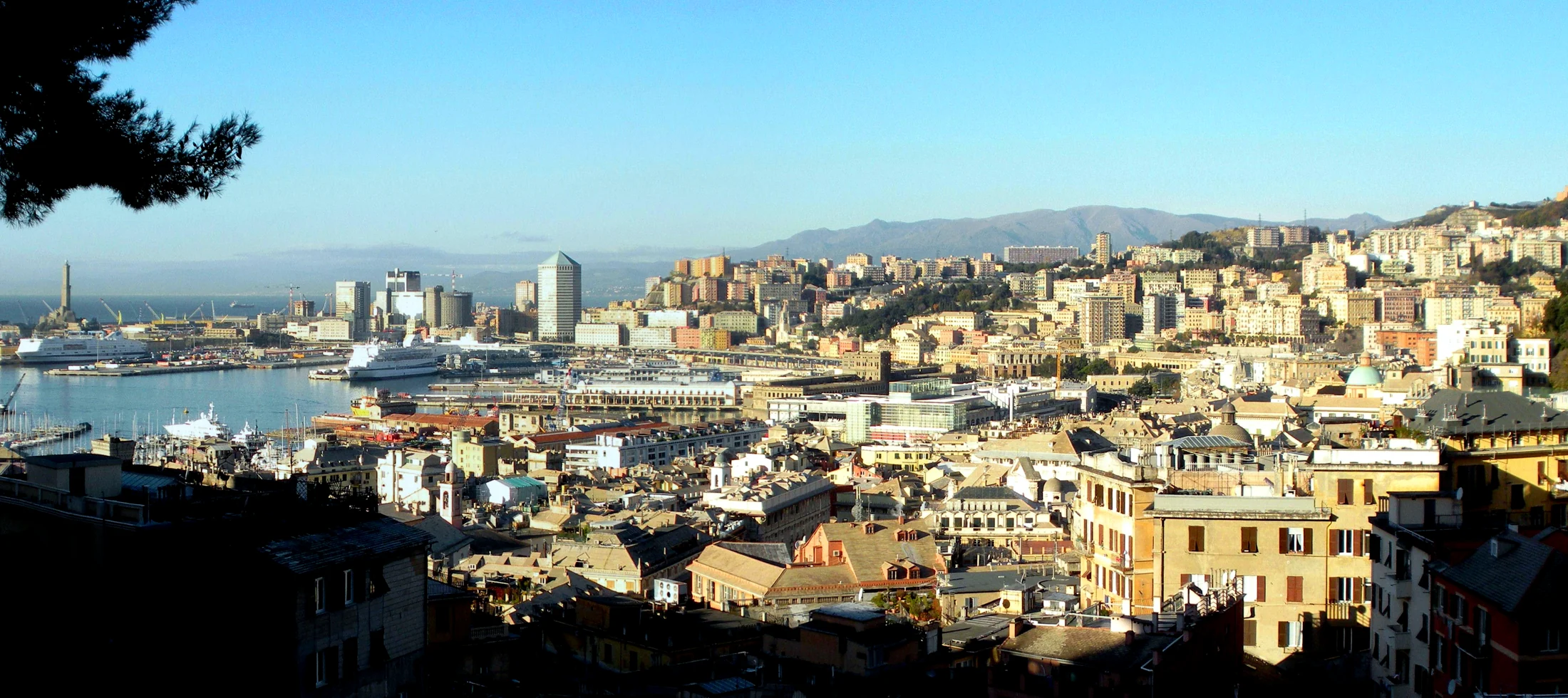
Genoa is not a tourist city that happens to have a port: it is a port that became a city, and almost everything that surprises a first-time visitor follows from that.
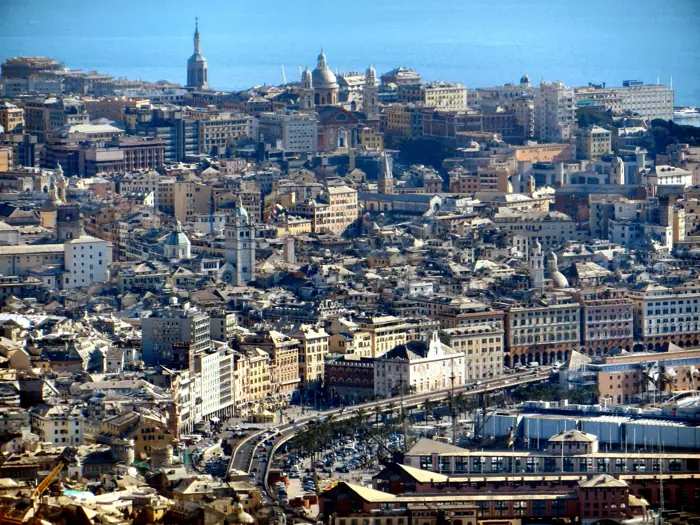
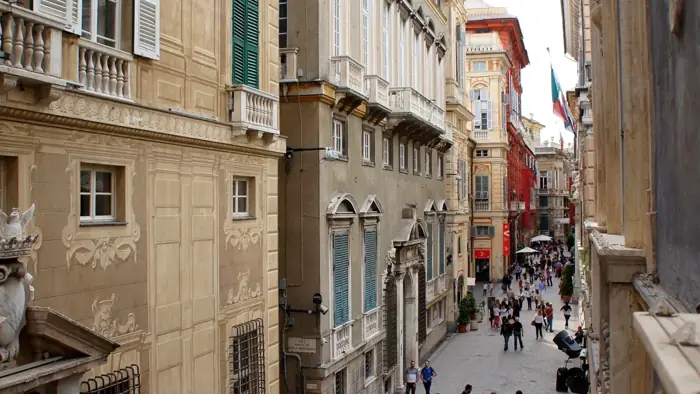
From that follows the old town, the largest maze of carruggi in Europe, built not to be looked at but to be lived in. From that follows the wealth that paid for the Rolli palaces. And from that follows the fact that the city is vertical: where there was no flat space people built upwards, and to get up there they installed public lifts and funiculars.
This page is for getting your bearings. The other Genoa guides go into the detail.
What to expect, and what not to
It is not a picture-postcard city. It is large, it has traffic, it has anonymous buildings next to UNESCO palaces, and the old town has beautiful stretches and stretches where you do not linger. Anyone arriving in search of Portofino in city format will be thrown.
It is a city that repays those who understand it. Nowhere else in Italy has forty-two World Heritage palaces born of a lottery mechanism, one of Europe's largest aquariums, a system of public lifts used as a vertical metro, and a fishing village inside the city boundary.
The four things it is made of
The old town and the Rolli. The heart, and the reason UNESCO inscribed "Le Strade Nuove and the system of the Palazzi dei Rolli" in 2006. The detail is in the guide to the old town and the Rolli.
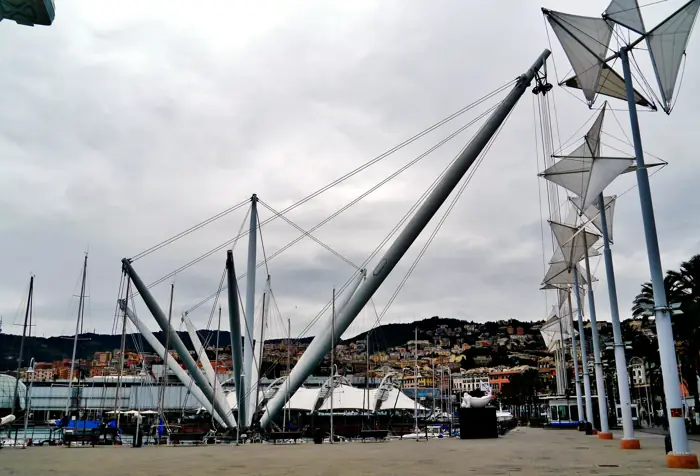
The Porto Antico. The Aquarium, the Galata, the Biosfera and the Bigo, all in the same space. It is the most organised and easiest part of the city, and the one that works with children: see Genoa with children.
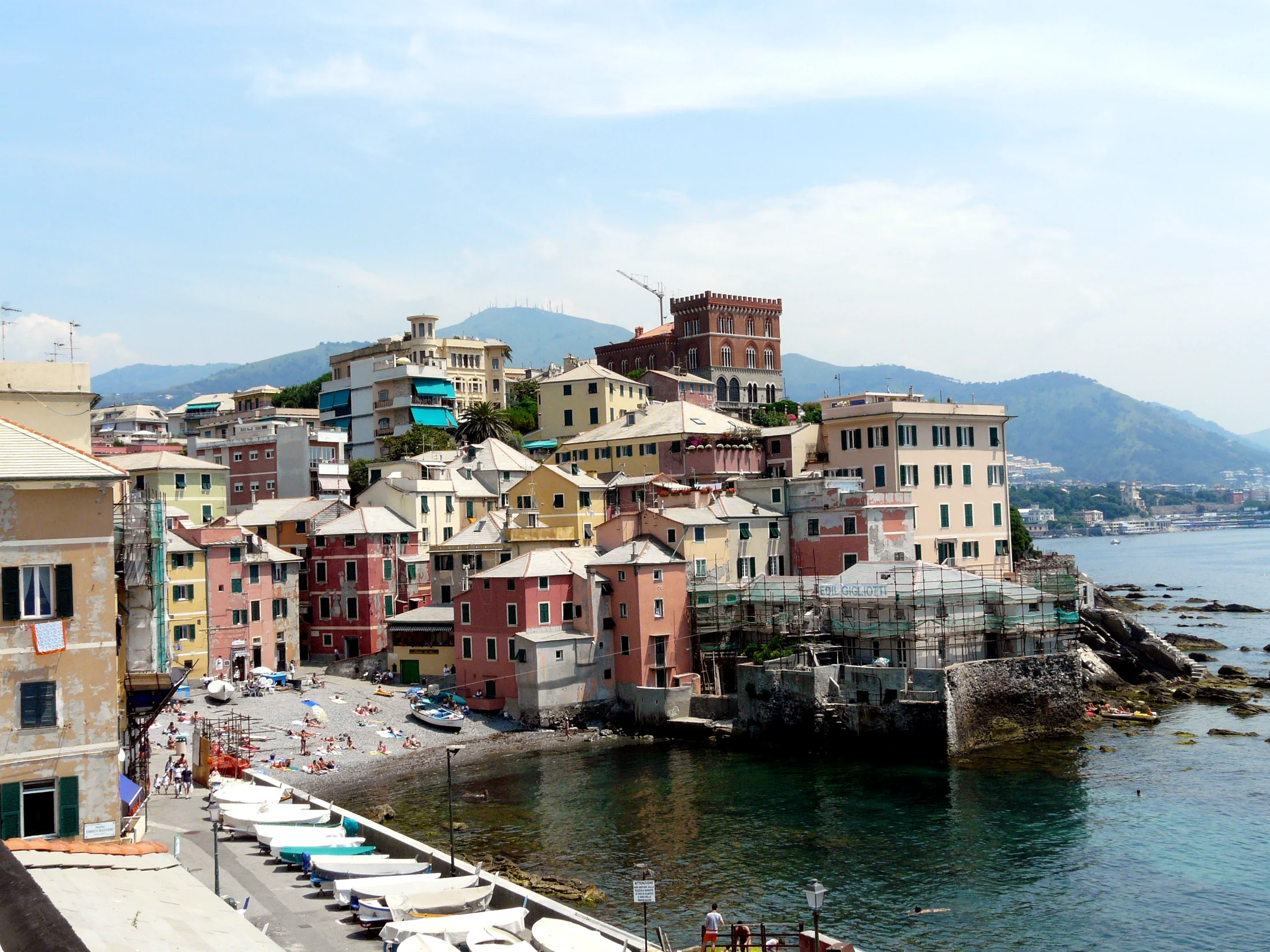
The sea, which is to the east. Not at the Porto Antico: Corso Italia, Boccadasse and Nervi, which is where the Genoese go to swim. See the sea at Genoa.
The vertical city. Two funiculars, twelve public lifts and a rack railway from 1901, all part of public transport. It is the thing Genoa has and no other Italian city does: getting around Genoa without a car.
How much time you need
- One day: the old town, San Lorenzo, via Garibaldi, and sunset from Castelletto.
- Two days: on the second you choose between the Aquarium and the sea to the east. See Genoa in two days.
- Three or more: you add Nervi with its parks and museums, the Lanterna, and the time to go properly inside a palace instead of looking at courtyards.
With less than a full day you see the centre and that is all, and it is still a good day.
When to go
- Spring and autumn are the best months: the city lives all year and has no dead season, and without the heat the lanes and the climbs are a different matter.
- Summer: the city does not empty out the way seaside resorts do, but the heat in the centre tells and the city's sea is what it is. It works if you alternate city and the eastern shore.
- Winter: museums and palaces are indoors and the city is alive. The risk is rain, and Genoa in the rain has a practical problem: the stone lanes get slippery.
Where to stay
The choice of district matters more here than elsewhere, because it dictates how you move:
- Principe — handy for the train and the port.
- Brignole — the centre and links to the eastern side.
- Old town — everything on foot, but no parking and restricted access.
- Nervi — sea and train, twenty minutes from the centre.
- The hills — the view, in exchange for depending on funiculars and lifts.
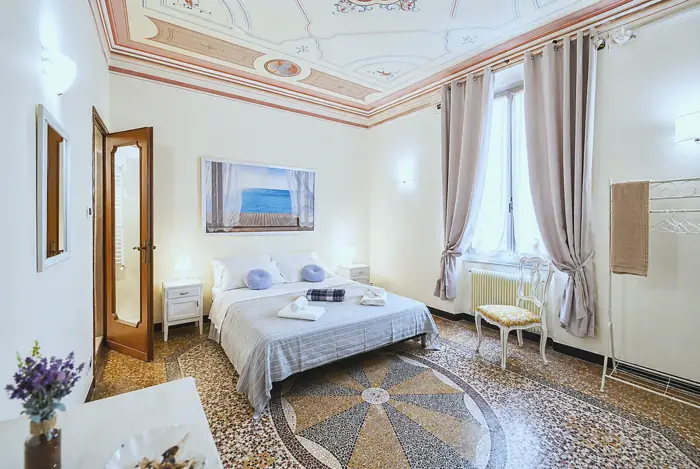
The places to stay in Genoa on this site are contacted directly, with no commission.
Frequently asked questions
How much time do you need to visit Genoa?
One day for the old town and via Garibaldi, two to add the Aquarium or the sea to the east, three to go inside the palaces at leisure and get out to Nervi. Less than a day is enough for the centre.
Why are the Palazzi dei Rolli a UNESCO site?
Because in 2006 UNESCO inscribed "Le Strade Nuove and the system of the Palazzi dei Rolli": not just buildings, but the public mechanism by which the Republic of Genoa lodged state guests in private residences entered on official lists. Forty-two palaces are inscribed.
Is Genoa good for a beach holiday?
Only partly. The city's sea is to the east — Corso Italia, Boccadasse, Nervi — and it is rock and pebbles, not sand. For a real beach holiday you go down towards the Tigullio; for a city stay with the sea a train ride away, Genoa works.
Do you need a car in Genoa?
No, and it is a hindrance in the centre: the old town cannot hold one, and the city has a metro, urban trains, funiculars and public lifts.
When is the best time to go to Genoa?
Spring and autumn. The city lives all year and has no dead season, but without heat and without rain the lanes and the climbs are far easier.