 Soggiorna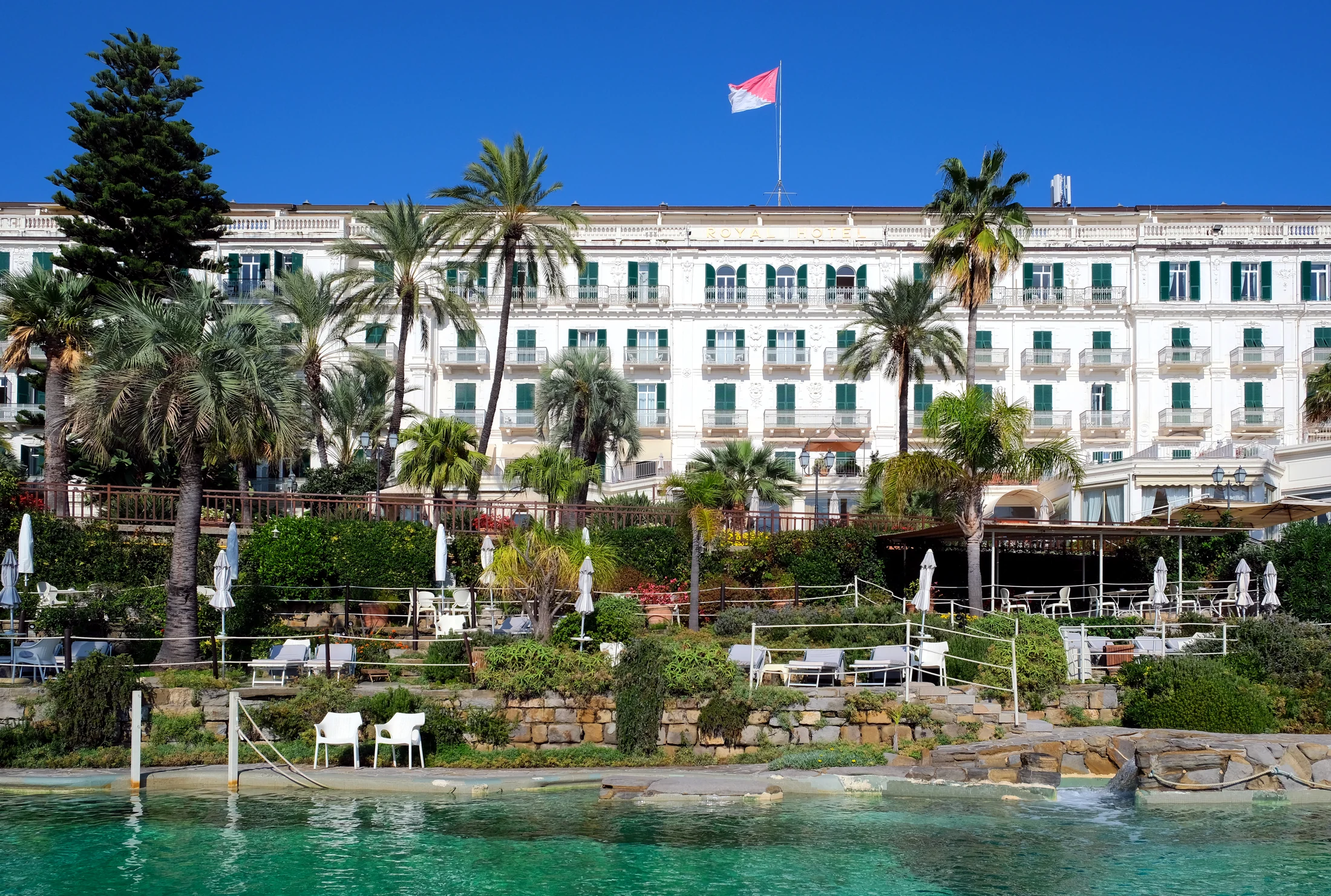
Italians know Sanremo for just one week a year, and it’s not the week worth traveling for. The Festival takes over the Teatro Ariston on Via Matteotti, where it has been held since 1977; for the remaining three hundred and fifty-eight days, the city is something else entirely, and that "something else" is why this guide is needed.
Sanremo is a late-19th-century holiday resort for Russians and British, with a medieval center above and a railway turned cycle path below. These three elements have nothing to do with each other, yet they all fit within four kilometers.
The City of the Empresses
The seafront promenade is called Corso Imperatrice and is named after the Russian Empress Maria Alexandrovna, who fell in love with Sanremo and gifted it the palm trees that still stand today.
A little further up, near the Casino, five colorful domes mark the Church of Christ the Savior, the Russian church, built at the behest of Empress Mother Maria Feodorovna — mother of Nicholas II — and consecrated to Christ the Savior, Saint Seraphim of Sarov, and Saint Catherine Martyr.
The Casino dates back to 1905: it opened on January 14, designed by French architect Eugène Ferret, and is the oldest operating casino in Italy, one of only four functioning in the country. It features a white Liberty-style facade and Murano glass chandeliers. Even those who don’t gamble pass by and understand what kind of city was envisioned.
Then there is Villa Nobel, where Alfred Nobel spent his final years and conducted his last experiments: today it is a museum, and it is the aspect of Sanremo that almost no one knows about.
The Medieval City: La Pigna
Above the 19th-century section lies La Pigna, the historic center: alleys and staircases spiraling upwards — hence the name — reaching a point from which you can see the sea, the rooftops, and the hinterland as far as Monte Bignone.
It is the most beautiful but least maintained part, and this must be said: La Pigna is not a restored historic center created for tourists. You walk through it knowing it is an inhabited neighborhood, with some areas polished and others less so.
Details on what to see are found in Sanremo beyond the Festival.
The Railway Turned Cycle Path
In 2001, the single-track railway running along the coast was dismantled and moved inland. On its former route, the cycle path of the "Riviera dei Fiori" Coastal Park was born: 24 kilometers between Ospedaletti and San Lorenzo al Mare, flat, traffic-free, right by the sea. After connection works in spring 2023, the stretch between Imperia and Ospedaletti covers 28 kilometers.
This is the thing that changes a holiday here the most, yet guides usually mention it in just one line. It is not a sports route: it is a pedestrian and cycling corridor connecting coastal towns, used to go to the beach, to dinner in the neighboring town, or to Bussana.
Who Should Visit, and Who Should Not
Ideal for those who want a real city with the sea, open all year, wearing its Belle Époque heritage and with a cycle path at its doorstep. Ideal for those traveling in low season: here there is no "dead season" like in small villages.
Not ideal for those looking for the postcard-perfect Ligurian village — that is found in Cervo or Bussana Vecchia — nor for those imagining Caribbean beaches: the coastline alternates between sand and pebbles.
When to Go
- Spring: The best time. This is the city of flowers, and in spring you understand why.
- June and September: Good sea conditions, lower prices, no queues.
- July and August: Crowded, like the rest of the coast.
- February: The Festival takes place. If you aren't coming for that, be aware that hotels and prices reflect the event for everyone.
How Much Time Do You Need?
One day for La Pigna, the Casino, and Corso Imperatrice. Two days to add the cycle path or a day at the beach. Three if you also want to visit Bussana Vecchia and Villa Nobel without rushing.
Accommodations in Sanremo on the portal can be contacted directly.
Arriving, and Getting Around Without a Car
Since 2001, Sanremo station has been underground and in the center: you exit and you are already in the city, avoiding the transfer required in many nearby municipalities. The line is the Genoa-Ventimiglia route. The old track along the seafront has become the Coastal Park cycle path, 24 kilometers between Ospedaletti and San Lorenzo al Mare: it is not just a sports outing, but the simplest way to move along the coast, and it does not close in winter. One thing to keep in mind: in February there is the Festival, and hotels, trains, and parking are affected for everyone, even those not attending.
Frequently Asked Questions
What to see in Sanremo besides the Festival?
The 1905 Casino, the Russian Church of Christ the Savior with its five domes, Corso Imperatrice with the palms gifted by Empress Maria Alexandrovna, the historic center of La Pigna, and Villa Nobel, where Alfred Nobel spent his final years.
Why is Sanremo called the City of Flowers?
Due to the floriculture that drove its economy and gave its name to the Riviera dei Fiori (Flower Coast), the area between Imperia and the French border. Spring is the season when the reason for the name is most evident.
How much time is needed to visit Sanremo?
One day for the center — La Pigna, Casino, Corso Imperatrice. Two days to add the cycle path or a day at the beach, three to reach Bussana Vecchia and Villa Nobel as well.
What is La Pigna in Sanremo?
The medieval historic center, made up of alleys and staircases spiraling upwards — hence the name — above the 19th-century city. From the top, you can see the sea, the roofs, and the hinterland as far as Monte Bignone. It is an inhabited neighborhood, not a historic center rebuilt for visitors.
Is Sanremo visitable out of season?
Yes, and it is one of its advantages: it is a city that lives all year round and does not empty out like seaside resorts. However, in February there is the Festival, and hotels and prices reflect this.