 Soggiorna
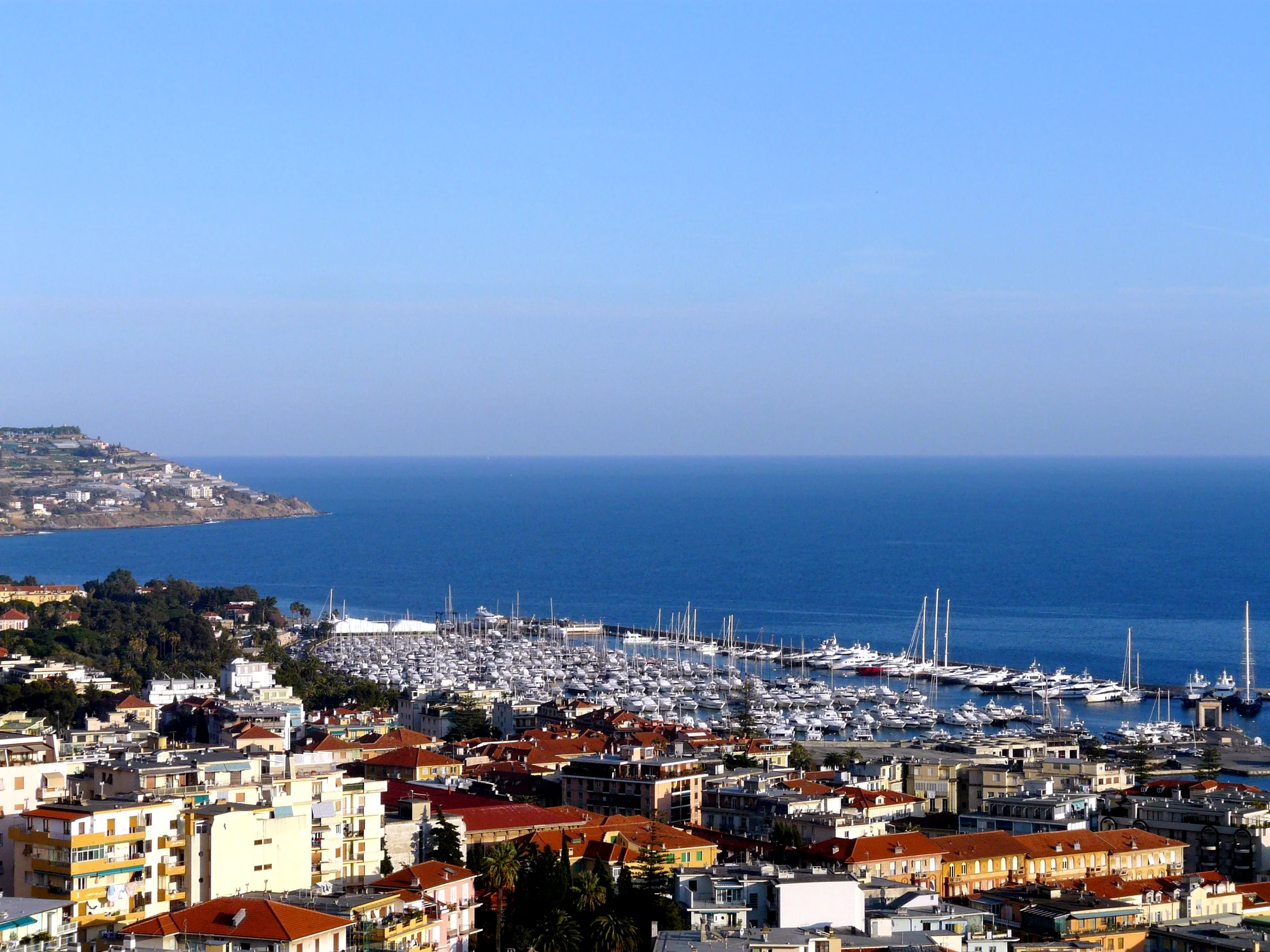
Sanremo is not a village where everything fits into three streets: it is a long town between the sea and a steep hillside, with a nineteenth-century centre, a medieval quarter clinging to the slope, two stretches of coast running out towards the neighbouring towns, and hamlets up above. Where to stay depends on three things: how you arrive, when you arrive, and whether you want to use the car once you are there.
The rule in one line
If you arrive by train, stay in the centre: the station is underground and in town, you walk out and you have arrived. If you arrive by car, sort out parking before you book, because in the centre it is limited and paid. If you are coming for the sea and the bike, pick an area along the cycle path, and the car stays put.
The areas, one by one
Centre: via Matteotti, the Casino and Corso Imperatrice
The Belle Époque and shopping Sanremo: the promenade with the empress's palms, the Casino, the Russian church, the Teatro Ariston, the Mercato Annonario and the Civic Museum, all on foot.
In favour: you need transport for nothing, the station is close and the Riviera Trasporti buses start here. Out of season it is the area that stays most alive, and if it rains you are already where things are open. Against: parking is the real problem, and the area is lively in the evening. In the Festival weeks, in February, the area around the Ariston changes completely: access, traffic and prices.
The Pigna
The medieval old town above the city, made of lanes and stairways spiralling up to the sanctuary of the Madonna della Costa.
In favour: it is the most beautiful part of Sanremo, with views over the sea and the rooftops, and the centre is below you, downhill. Against: it is all steps. Cars cannot reach the door, luggage is carried by hand, and with a pushchair or anyone who struggles to walk it is the wrong choice. It is a lived-in neighbourhood, not one restored for tourists: some stretches are well kept, others are not.
East: towards Tre Ponti, Bussana and Arma di Taggia
Beyond the harbour the town stretches east, with the cycle path running above the beaches.
In favour: here is Tre Ponti, the largest free beach in the area, with toilets and showers, and further on Bussana Mare, on a bay. With children who cannot swim, Arma di Taggia — a separate municipality — with its shallow water is just over a quarter of an hour by car. Above sits Bussana Vecchia, the artists' village. Against: the centre is not round the corner: in the evening you go by bike, bus or car.
West: towards Capo Pino and Ospedaletti
On the other side, to the west, the town becomes more residential and quieter as far as Capo Pino, and the cycle path runs to Ospedaletti, where it begins.
In favour: less through traffic, the sea on your doorstep, the cycle path to get to the centre without a car. Against: as in the east, in the evening the centre is a journey, not a five-minute stroll.
The hills
The hamlets and scattered houses on the heights behind the town.
In favour: silence, space, the view over the bay, often a parking space. Against: you cannot manage without a car. The roads are narrow and steep, and every trip down to the sea or the centre means finding parking all over again. It makes sense if you want calm and plan to use the car every day, not if you are coming for the cycle path.
The comparison, in a table
| Area | Centre on foot | Sea and cycle path | Without a car | Suits |
|---|---|---|---|---|
| Centre and Corso Imperatrice | yes | on the promenade | yes | people arriving by train, off-season visitors |
| Pigna | yes, downhill | walking down into town | yes, but many steps | light travellers who love old lanes |
| East (Tre Ponti, Bussana) | no: bike or bus | yes | yes, with bike or bus | families and beach days |
| West (Capo Pino, Ospedaletti) | no: bike or bus | yes | yes, with bike or bus | people wanting quiet |
| Hills | no | by car | no | people with a car who want silence |
The February Festival
The Festival has been held at the Ariston since 1977, and for one week in February the town is different: hotels, trains and parking all feel it, even for people who are not there for it. If you are coming for the Festival, book early and in the centre, because everything revolves around via Matteotti. If you are not, the simplest choice is to avoid that week: the same rooms a few weeks earlier or later are another story.
Arriving by train
Since 2001 Sanremo station has been underground and in the centre, on the Genoa-Ventimiglia line. For anyone travelling without a car it is the starting point for everything: ask the property how many metres it is from the station, not how many minutes. Bikes travel free on Ligurian regional trains marked with the bicycle pictogram, within the region.
Arriving by car
In the centre parking is limited and paid. The municipality runs two multi-storey car parks, the Palafiori and the new station car park, with occasional stays of up to seven days paid in advance: according to the municipality's transparency portal it costs €110 at the Palafiori and €90 at the new station. We do not give hourly rates, because we have not found an up-to-date official source.
Before booking, ask your host for three precise answers: is there a reserved parking space or an arrangement; how far away is it; and how do you unload luggage if the address is in the pedestrian zone or the Pigna. All the details are in how to get to Sanremo and get around without a car.
The cycle path as a deciding factor
Since 20 June 2026 the Riviera dei Fiori cycle path has run continuously for 45 kilometres from Ospedaletti to Andora, along the old railway line: flat, car-free, above the beaches. Staying a few minutes from the path means going to the beach, to dinner in the next town or to Bussana without touching the car. If that is your plan, ask the property whether it has somewhere safe for bikes. The full route is in the cycle path guide.
What to ask, always
Whatever the area, these questions head off most surprises:
- How many metres, not how many minutes, from the sea and the station.
- How many steps. In the Pigna and the hills it changes everything, especially with a pushchair.
- Where the car goes, and what it costs per day.
- Where the bikes go, if you are coming for the cycle path.
- Whether the tourist tax is included in the price or paid separately.
Properties on SoggiornaQui
We do not list hotels here that we have not checked. The Sanremo properties published on the portal are on the town page, in the properties in Sanremo section: your enquiry goes straight to the host, we add no commission, and you agree price and conditions with the property.
Frequently asked questions
Which is the best area to stay in Sanremo?
It depends how you arrive. By train, the centre between via Matteotti and Corso Imperatrice: the station is underground and in town. By car, a property with parking, even outside the centre. For the sea and cycling, the areas along the cycle path, east or west.
Can you stay in Sanremo without a car?
Yes, and it is the simplest way. Staying in the centre or near the cycle path, between trains, Riviera Trasporti buses and the bike you can reach the whole coast, from Ospedaletti to Andora.
Is it worth staying in the Pigna?
If you travel light and like old lanes, yes: it is the most beautiful part of town. If you have heavy cases, a pushchair or difficulty walking, no: it is all stairways and cars cannot get in.
How much does it cost to park for several days in Sanremo?
In the two municipal multi-storey car parks there is an occasional stay of up to seven days, paid in advance: €110 at the Palafiori and €90 at the new station, according to the municipality's transparency portal.
Can you find somewhere to stay during the Festival?
Yes, but it is the most expensive and busiest week of the year, and it pays to book well ahead. If you are not coming for the Festival, choose another week in February or March.
Read more
- Sanremo: A City Guide Between Belle Époque and the Festival
- Sanremo Beaches: Tre Ponti, Capo Pino and the Coast by Bike
- How to get to Sanremo and get around without a car
- Riviera dei Fiori cycle path: 45 km from Ospedaletti to Andora
- Sanremo with kids: 24 flat kilometers without a car
- What to do in Sanremo when it rains