 Soggiorna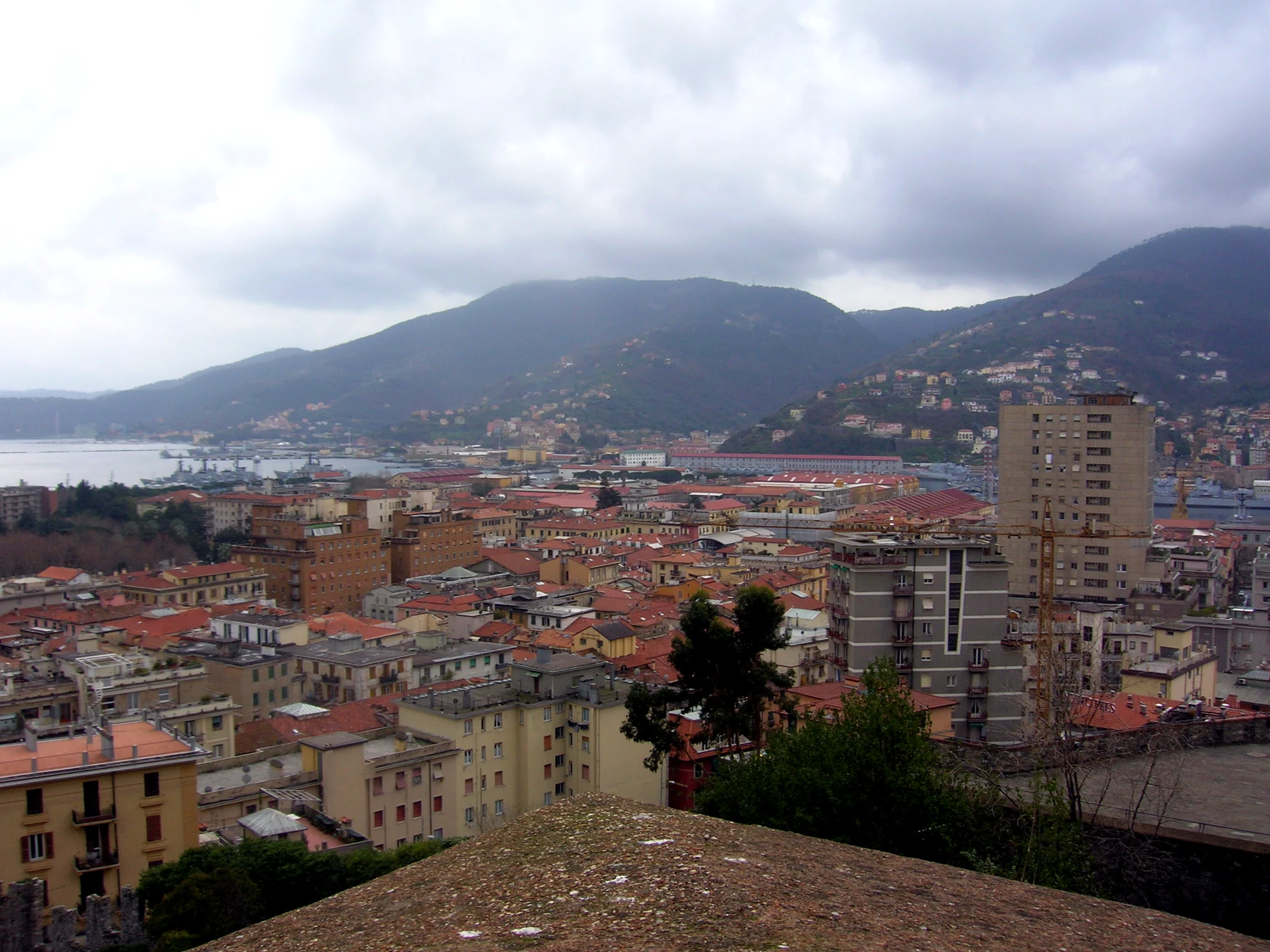
A city that grew through accumulation scatters its attractions. La Spezia was planned, and it shows: almost everything worthwhile is along a single pedestrian street, or slightly higher up.
That street is Via del Prione. It crosses the historic center from end to end, with museums and squares facing onto it; it’s the only orientation you need. Anyone arriving at the station and heading down it has already solved the problem of how to get around.
The Lia Museum, at number 234
At 234 Via del Prione lies the city’s best attraction: the Amedeo Lia Museum.
It has a dual nature worth keeping in mind as you enter. The container is the Convent of the Minims of San Francesco di Paola, built starting in 1616. The content is a private twentieth-century collection: that donated by entrepreneur Amedeo Lia to the Municipality, open to the public since 1996.
So it is not a civic museum layered over centuries, nor a house-museum. It is one person’s collection, placed inside a building four centuries older. The two do not resemble each other, and that is exactly why it works.
The castle, which is older than the city
On the Poggio hill, above the rooftops, stands the Castello San Giorgio: a fortification of medieval origin, 13th century.
Let’s pause on this for a moment. The modern city below was born after 1861. The castle predates it by six hundred years. It is the only thing in La Spezia older than La Spezia itself—a piece of the medieval village left at the top while an industrial city grew beneath it.
Today it houses the Archaeological Museum, and here the coincidence closes: the finds come from necropolises excavated in the region, meaning from people who inhabited this gulf long before anyone decided to build a city there. The oldest part of La Spezia guards the oldest things in the gulf.
The climb is rewarding even just for the view.
The Naval Technical Museum, where history is visible
Next to the arsenal is the Naval Technical Museum. This is the place where the reason for this city’s existence stops being a story and becomes something to look at: models, instruments, ship parts.
If you have read why La Spezia went from fifteen thousand inhabitants to one hundred twenty-three thousand—it is explained in La Spezia: the complete guide—this is the museum that shows it to you.
The Umbertino district, which is not a monument
It doesn’t have a ticket and isn’t on the lists, but it’s worth a walk: the Umbertino is the district built to house the workers arriving to work at the arsenal.
Straight streets, regular blocks, buildings all of the same height. It is not picturesque and doesn’t want to be: it is rapid housing for a population doubling. Walking through it after seeing the thirteenth-century castle gives you a measure of what happened here in eighty years.
What NOT to expect
There is no postcard-perfect medieval historic center. What is the reason for the trip in Vernazza or Portovenere does not exist here: the center is nineteenth-century, regular, and wide.
The arsenal cannot be visited freely. It is an active military base. What can be seen is the museum next to it.
It is not a full-day affair. At a leisurely pace, Via del Prione, the Lia Museum, and the castle take half a day. That is the right amount of time to carve out before catching the train to the Cinque Terre, and how to get there is explained in how to reach La Spezia and park.
Frequently asked questions
What can you see in La Spezia in half a day?
Via del Prione, the central pedestrian street; the Amedeo Lia Museum at number 234; and Castello San Giorgio on Poggio hill. If you have extra time, the Naval Technical Museum next to the arsenal.
What is the Amedeo Lia Museum?
The private collection that Amedeo Lia donated to the city, open to the public since 1996. It is located at 234 Via del Prione, inside the Convent of the Minims of San Francesco di Paola, built starting in 1616.
How old is Castello San Giorgio?
It is of medieval origin, dating to the 13th century: six hundred years older than the modern city beneath it, which was born after 1861. It houses the Archaeological Museum.
Can you visit the La Spezia military arsenal?
No, it is an active military base. What can be seen is the Naval Technical Museum, located next to it.
Is it worth visiting the Umbertino district?
It is not a monument and has no ticket, but yes: it is the district built for the arsenal workers, with straight streets and regular blocks. It gives a sense of how quickly the city grew.