 Soggiorna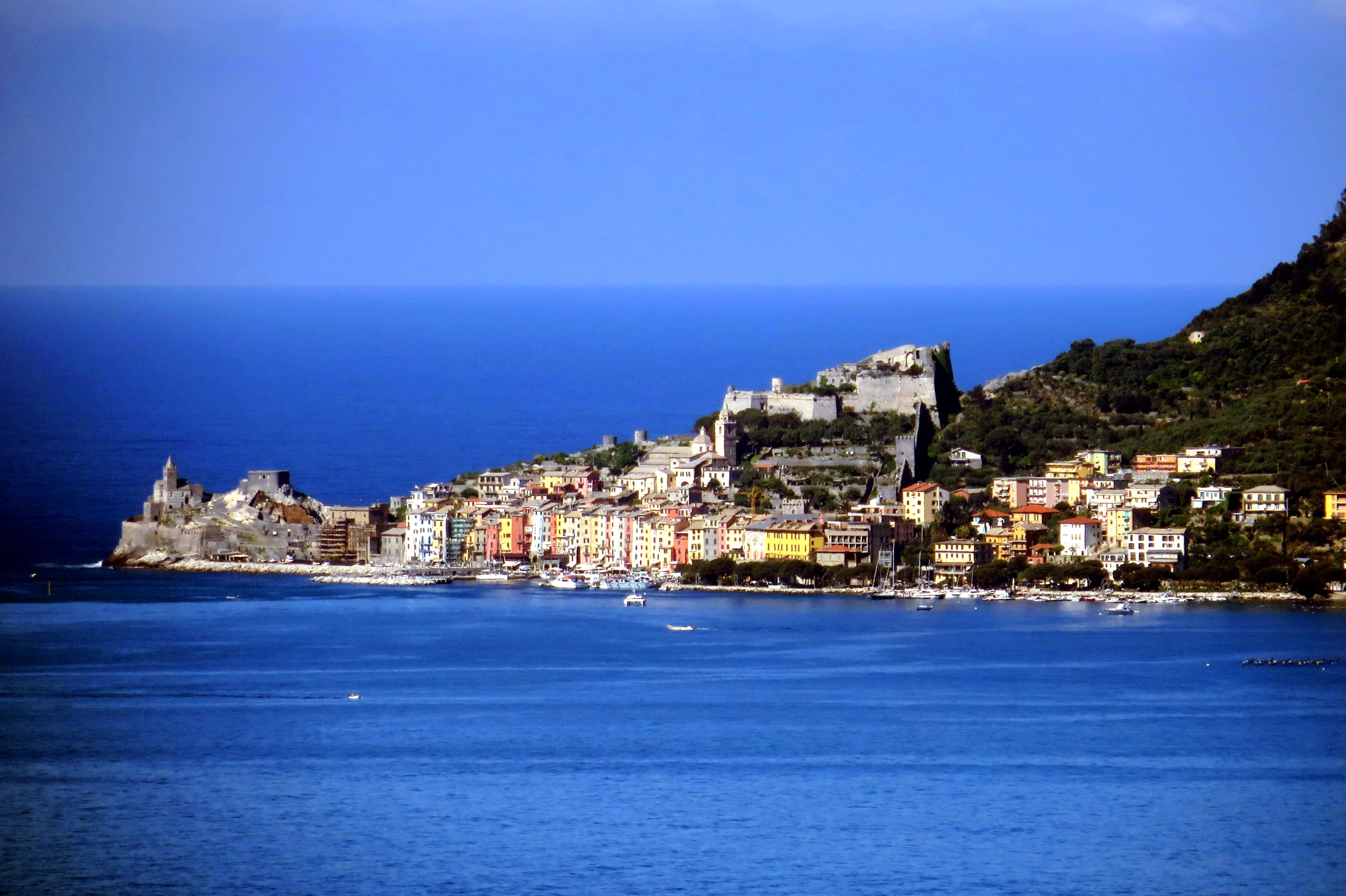
At the far end of the Gulf of Poets, Portovenere is a UNESCO site together with the Cinque Terre, but with a character all of its own: the church of San Pietro planted on the cliff, the colourful carruggio and, a few minutes' crossing away, the island of Palmaria.
San Pietro and the castle
The defining image is the church of San Pietro, Gothic with black and white bands, built on the rocky point sheer above the sea: the climb repays you with one of the most famous views in Liguria, towards Byron's grotto and the coast of the Cinque Terre. Above the village, the Doria castle commands the whole gulf.
The village
The main carruggio runs parallel to the coloured row of houses along the little harbour, between shops and restaurants; the side stairways climb towards the church of San Lorenzo and the castle. Portovenere can be walked in half a day, but it is the kind of place where time willingly stretches.
The island of Palmaria
Facing the village, Palmaria is the largest of the Ligurian islands: a few minutes by ferry from the quay, it is explored on the path that circles it, between pine woods, former fortifications and coves. The full loop takes several hours and proper shoes; alternatively, swim at the beach closest to the landing stage and head back.
Getting there
Portovenere has no railway: you arrive by bus from La Spezia, by boat (in season, also from the Cinque Terre and Lerici) or by car, allowing for limited, paid parking in high season. The most convenient summer combination is the train to La Spezia and then the boat.
Frequently asked questions
How long is the crossing to Palmaria?
A few minutes' sailing from the quay at Portovenere, with frequent departures in season.
Is Portovenere suitable for children?
Yes, with care on the stairways and viewpoints; Palmaria, on the other hand, calls for legs ready for a short hike.
What is the best time of year?
Spring and September: colours, sea and a village that stays liveable without the August crush.