 Soggiorna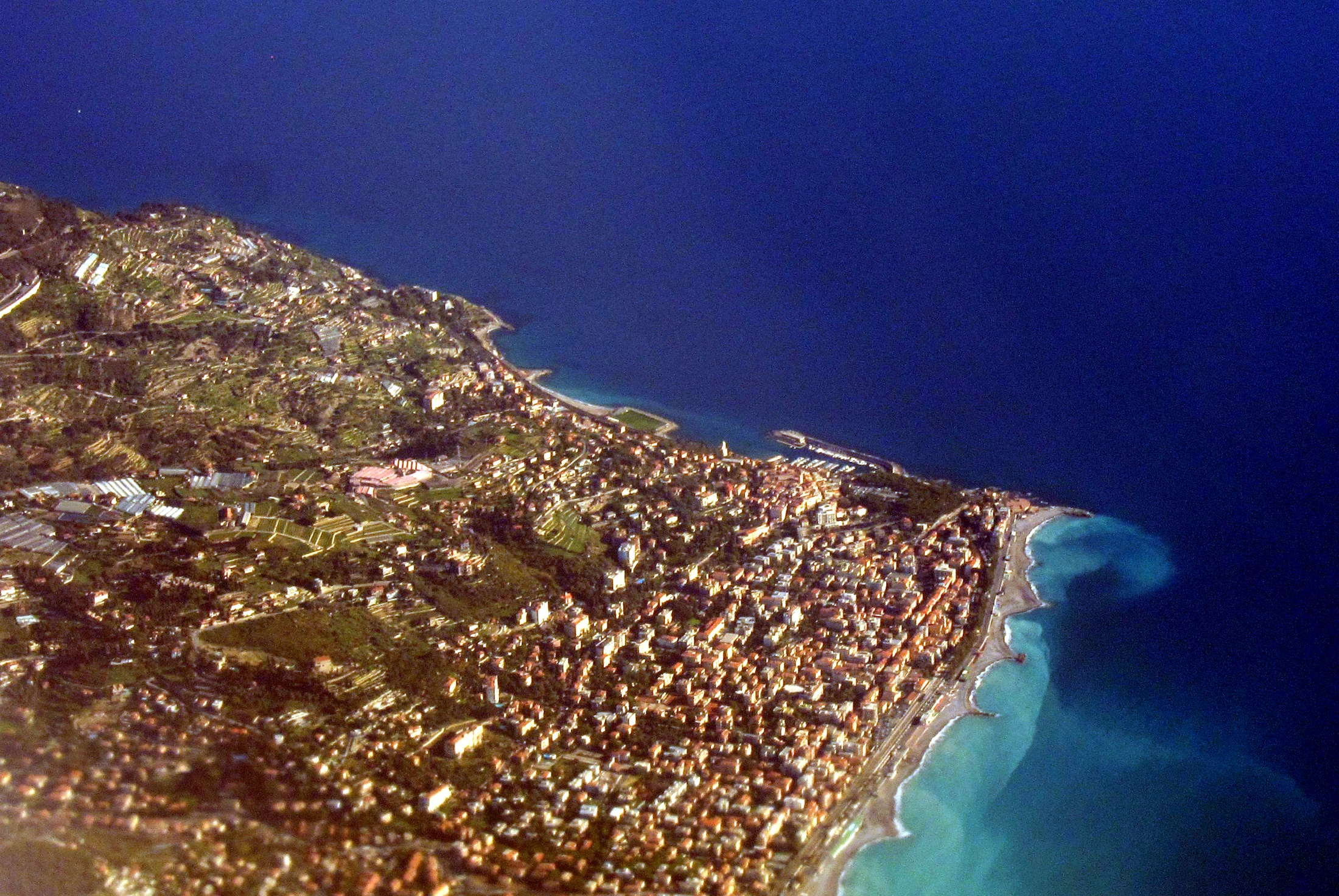
Almost every town on the Riviera claims to have been "discovered" by the English in the 19th century. Bordighera is the only one that can say which book.
In 1855, Giovanni Ruffini published a novel titled Il Dottor Antonio (Dr. Antonio) in Edinburgh, in English. It wasn't a travel guide: Ruffini was a patriot in exile, and he wrote it to win British public opinion over to the cause of Italian unification. The love story between young Englishwoman Lucy and the patriotic doctor was the vehicle; the Ligurian landscape served as the backdrop.
It worked, but not quite how he intended. Readers came looking for the places described in the book. Edmondo De Amicis wrote that among the first English visitors who came to winter here, there wasn't one who hadn't read it, and they all asked to see the inn where Lucy had been treated.
Bordighera, then, is a tourist city invented by a political operation that backfired. Keeping this in mind, everything else about the city explains itself.
The Upper Town, and the Exact Date
Bordighera Alta didn't grow gradually: it was founded in a single day. On September 2, 1470, thirty-two families from Borghetto San Nicolò gathered in the parish church and decided to build a new village on the promontory.
The result is still entirely there: pentagonal walls and three gates, which you cross in the order history opened them.
- Porta Sottana, the western gate, dates to 1470 — the foundation gate, later rebuilt with the Genoese shield above the arch.
- Porta del Capo, or Sant'Ampelio Gate, is from the 17th century.
- Porta Soprana, known as the Maddalena Gate, was opened only in 1780.
Three centuries between the first and the last. A village that opens so slowly is a village that feared something for a long time.
The Southernmost Point of Liguria
Below the old town, on the rocks, stands the church of Sant'Ampelio, dating from the 11th century. The headland on which it sits is the southernmost point of all Liguria: Bordighera is the region's most southerly municipality, which explains the mild winters the English came seeking.
The saint arrived here by boat from Egypt around 400 AD and lived in the cliff caves. The town was built around that hermit a thousand years later.
The Palms, and a Dispute That Has Lasted Centuries
Bordighera is the city of palms, and the reason isn't the climate: it's a papal privilege.
In 1586, Sixtus V had the Egyptian obelisk raised in St. Peter's Square — twenty-five meters high, weighing approximately three hundred tonnes — and imposed absolute silence, punishable by death. When the ropes began to give way due to friction, a sailor, Benedetto Bresca, broke the silence by shouting to wet the ropes. Instead of executing him, the Pope granted his homeland the right to supply the Vatican with woven palm fronds — the parmureli — for Palm Sunday. This tradition continues today.
One more honest note: Bresca's origin is disputed between Bordighera and Sanremo, and sources are divided. The rivalry is alive and well, and no one has won yet. We don't take sides: we simply report that it exists.
Monet, Who Came for a Month
In January 1884, Claude Monet arrived in Bordighera planning to stay four weeks. He stayed seventy-nine days.
He explained why himself: he couldn't get a handle on it. He painted in the Moreno Garden on Via Romana — created around 1830 by Vincenzo Moreno, an oil merchant, and famous throughout Europe at the time for its exotic species — and worked on multiple canvases simultaneously. He took away about forty paintings (the exact count varies by source, between thirty-eight and fifty).
This isn't just a decorative anecdote: it is the best description of the light along this stretch of coast that exists, made by someone who found it difficult.
What Remains of the English Colony
Two things, both open to visitors.
The Bicknell Museum, opened in 1888 by English naturalist Clarence Bicknell, is the oldest museum in the Western Ligurian Riviera. It houses the International Institute of Ligurian Studies and a library with forty thousand volumes in Italian, twenty thousand in English, six thousand in French, and three thousand in German. Those numbers alone tell you who lived here.
Villa Regina Margherita, built between 1914 and 1916 for Italy's first queen — who died in Bordighera in 1926 — is now a museum.
And the Garden on the Volcano
The Pallanca Exotic Garden sits on the slopes of Monte Nero, an ancient volcano: three thousand varieties of succulents and cacti on one hectare of rock overlooking the sea, collected by four generations of the same family. Paid entry.
How to Plan Your Day
The waterfront is the Lungomare Argentina: two kilometers, the longest pedestrian promenade on the Western Riviera. It bears that name because Eva Perón inaugurated it in 1947.
For the classic half-day itinerary — upper town in the morning, sea in the afternoon — there is already a dedicated route: what to see in Bordighera in one day.
Frequently Asked Questions
Why is Bordighera called the City of Palms?
Due to a privilege granted by Pope Sixtus V in 1586: sailor Benedetto Bresca broke the silence imposed during the raising of the St. Peter's Square obelisk by shouting to wet the ropes, and in return his homeland obtained the right to supply the Vatican with woven palm fronds for Palm Sunday. Bresca's origin is disputed between Bordighera and Sanremo.
What is there to see in Bordighera?
The medieval village of Bordighera Alta, founded on September 2, 1470, with its three gates; the church of Sant'Ampelio on the southernmost cape of Liguria; the 1888 Bicknell Museum; Villa Regina Margherita; the Pallanca Exotic Garden; and the Lungomare Argentina, two kilometers of pedestrian walkway.
Why is Bordighera full of English villas?
Because the British winter colony was born from a novel: Il Dottor Antonio by Giovanni Ruffini, published in English in 1855 to convince the British to support Italian unification. Readers came looking for the places in the book and never left.
Did Monet paint in Bordighera?
Yes. He arrived in January 1884 intending to stay for a month but remained for seventy-nine days, painting about forty canvases, many in the Moreno Garden on Via Romana.
Is Bordighera the southernmost municipality in Liguria?
Yes: Capo Sant'Ampelio is the region's southernmost point. This is also the reason for the mild climate that attracted the English here in the 19th century.