 Soggiorna
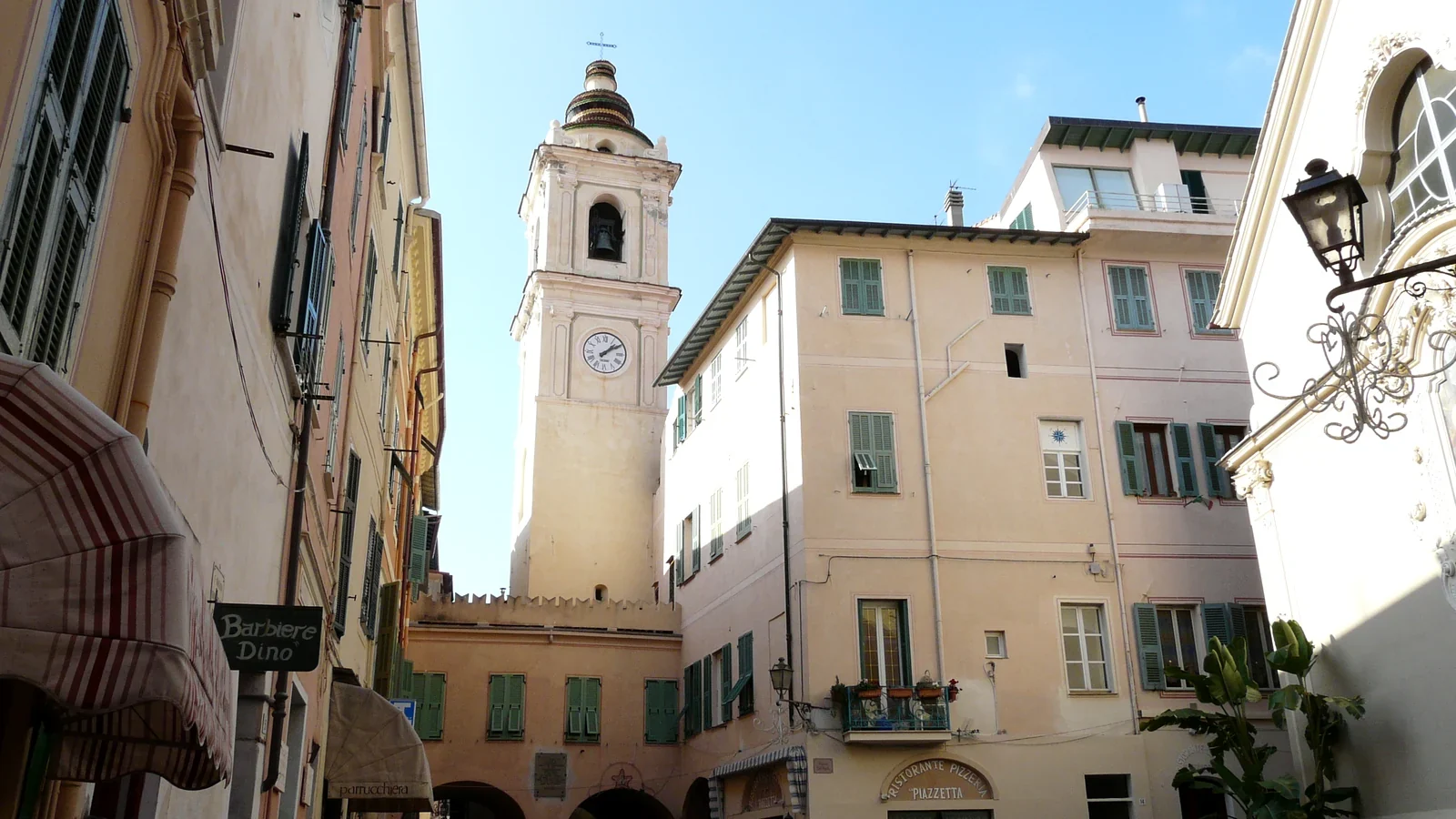
Bordighera is perfect for a day trip because it combines the sea, walks, historic center, and gardens within a relatively compact area. The most balanced itinerary starts from the seafront, reaches the church of Sant’Ampelio, climbs up to Bordighera Alta (Upper Bordighera), and ends with a museum or garden visit. It’s best to save the Beodo Trail for those who have more time.
A One-Day Itinerary in Bordighera
The city has two distinct sides: the coastal zone, open and bright, and the historic core nestled on the hill. While it is possible to see everything in one day, it is advisable to select your stops carefully and avoid trying to fit in a museum, botanical garden, and trail all at once.
Morning on the Seafront
The day can begin along Lungomare Argentina, a promenade ideal for a leisurely walk while observing the beaches, palm trees, and coastline profile. It serves as a good orientation point, especially for those arriving by train, as it helps you immediately understand the linear development of the resort.
The beaches are mostly pebbles and gravel. If you plan to swim, bring appropriate footwear and check in advance which sections are free, equipped, or accessible with necessary services.
The Church of Sant’Ampelio
Continuing along the coast, you reach the church of Sant’Ampelio, built in a particularly scenic position on the rocks. Local tourist sites describe this headland as the southernmost point of Liguria.
This stop requires little time but deserves a genuine pause. The sea, rocks, and building create one of Bordighera’s most recognizable panoramas. In the presence of waves or wet surfaces, stay on safe paths and avoid getting too close to the cliffs.
Bordighera Alta
After the sea, the route continues towards Bordighera Alta, the ancient village enclosed by alleys, small squares, and passages under houses. Here the atmosphere changes: the traffic and wide spaces of the coast give way to a more intimate urban fabric.
The historic center should not be approached as a checklist of monuments. The best part of the visit consists of walking through the caruggi (narrow alleys), entering the small squares, and observing portals, arches, facades, and glimpses of the sea.
Having lunch in the upper town allows you to break up the day nicely, especially in summer. Before choosing a restaurant, it is useful to check opening days and reservation requirements, without assuming that every business is operating out of season.
Clarence Bicknell Museum
In the afternoon, you can visit the Clarence Bicknell Museum. Founded in 1888, it preserves collections and a library related to the work of the English scholar. The external garden, with its large ficus trees, also contributes to the unique character of the place.
This stop is suitable for those who want to understand the historical relationship between Bordighera, the British cultural world, and the study of nature. Since opening hours and access may change, check the official website before visiting.
The Beodo Trail
The Beodo Trail follows the path of the ancient aqueduct and crosses olive groves, dry stone walls, and cultivated areas. The official route is indicated as being approximately three kilometers long.
It is not just a short detour. Those wishing to walk it should dedicate a significant part of their day, wear suitable shoes, and check the weather, trail conditions, and starting point. For a single-day itinerary, it is better to choose between the Beodo Trail and an in-depth visit to museums and gardens.
Gardens, Villas, and Monet’s Memory
Bordighera is linked to gardens, palms, historic villas, and the presence of foreign artists and scholars. The local tourist portal highlights, among others, Lowe Gardens, Winter Gardens, Pallanca Exotic Garden, Villa Garnier, and Villa Pompeo Mariani.
These attractions do not necessarily share the same opening hours or management. Therefore, it is unwise to build a schedule expecting them all to be open. For a single day, one well-chosen visit is sufficient.
How to Get There
Bordighera is reachable by car via the A10 motorway and is served by the local railway station. For many visitors, the train is the most practical choice, as it avoids parking searches and allows you to move on foot between the coast and the center.
Before departing, always check train schedules, potential transfers, and the last useful connection. Those continuing along the Riviera dei Fiori can combine Bordighera with Sanremo beyond the Festival, while for the hinterland, there is a guide to Dolceacqua and Val Nervia. For a broader journey, the Riviera di Ponente by train itinerary is also useful.
Recommended Schedule
- Morning: Lungomare Argentina and coastal walk.
- Late morning: Church of Sant’Ampelio.
- Lunch: Bordighera Alta.
- Afternoon: Alleys (caruggi) and Clarence Bicknell Museum.
- End of day: Return to the sea or stop at an open garden.
Those who prefer walking in nature can replace the museum and garden with the Beodo Trail.
When to Go
Spring enhances gardens and walks; summer allows you to add the sea but requires avoiding the hottest hours; autumn is suitable for the upper town and trails. Even winter can be pleasant on clear days, keeping in mind reduced hours and possible seasonal closures.
Frequently Asked Questions
Can Bordighera be visited without a car?
Yes. The city has a railway station, and many main stops can be connected on foot. The climb to the upper town may be challenging for those with mobility difficulties.
How much time does the Beodo Trail take?
The route is indicated as being about three kilometers long, but the total time depends on access, pace, stops, and return. Consider it a hike, not a short urban walk.
What not to miss in Bordighera?
For a first visit: the seafront, Sant’Ampelio, and Bordighera Alta. The Bicknell Museum, gardens, and Beodo Trail are excellent additions when you have more time.