 Soggiorna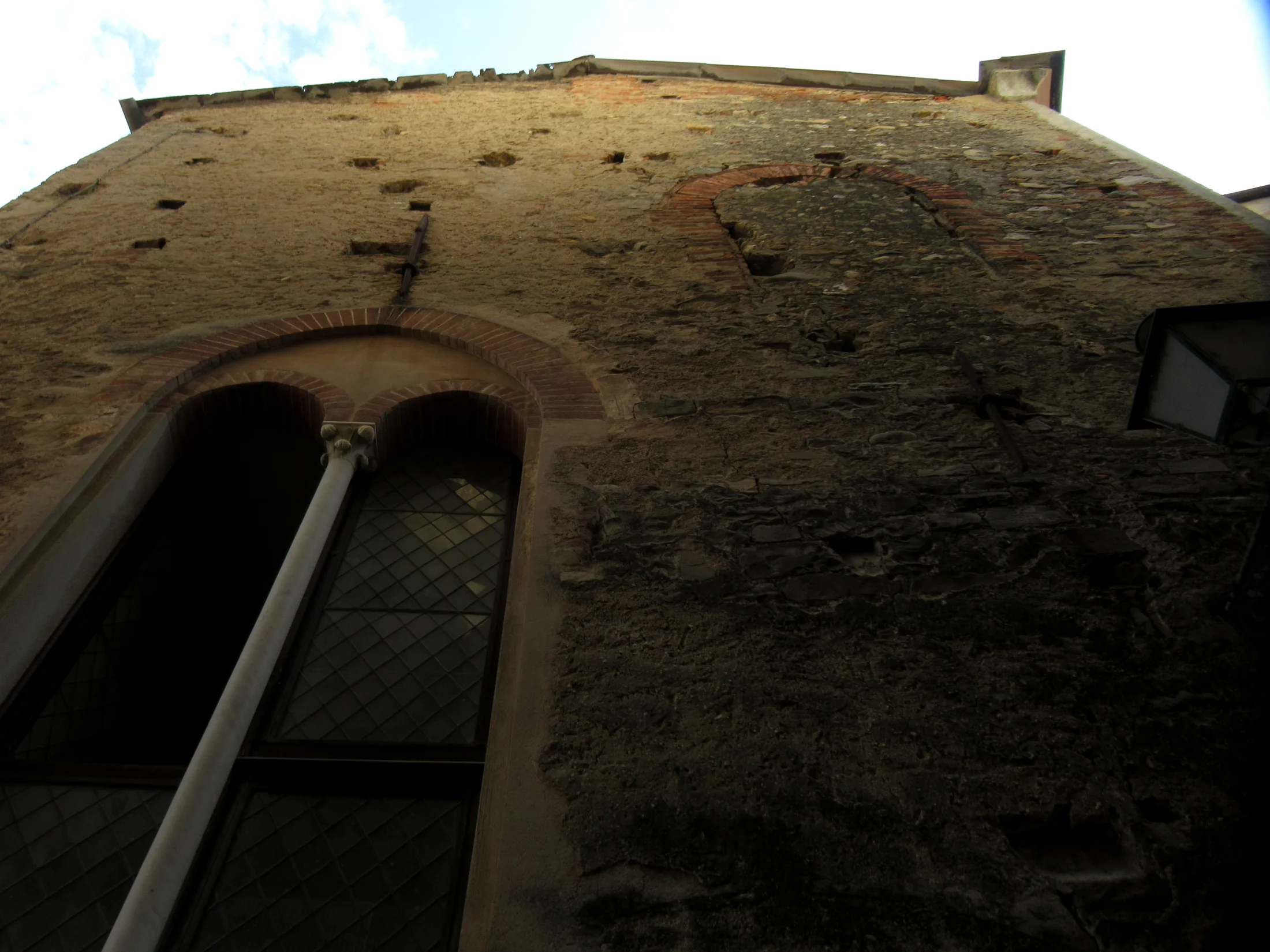
The things that make a city family-friendly are rarely the ones advertised on posters. In Albenga, there are three, and none is an attraction:
- The beach is sandy. Not pebbles: fine sand mixed with gravel, stretching for almost one and a half kilometers. With a small child, that makes all the difference — you can dig in sand; you just have to endure pebbles.
- It’s all flat. The Albenga plain is agricultural and spread out: there are no staircases or climbs that turn every move into a negotiation along this coast.
- The train station is 469 meters from the beaches. Seven minutes, flat, with a stroller. There’s no shuttle to catch, no parking to hunt for.
Together, these three factors outweigh any playground.
The shipwreck: the thing that always works
Inside the Roman Naval Museum, housed in Palazzo Peloso Cepolla, lies the cargo of a Roman transport ship sunk off Albenga between 100 and 90 BC.
Children don’t need more explanation than this: a ship sank two thousand years ago, and this is what was inside. The amphorae are right there, recovered from the seabed visible through the window. It’s the only thing in town that holds attention effortlessly, and it has the advantage of being indoors — meaning it’s usable during the hours when the sun makes the beach unbearable.
The towers, if told the right way
Albenga’s historic center boasts a forest of medieval towers, which numbered over a hundred in the 13th century. Stated like that, it’s just a fact. Stated differently, it works:
To build a tower, you had to own at least one ship. The tower wasn’t decoration; it was proof that a family traded by sea. The higher the tower, the bigger the trade — and families glared at each other as they built upwards.
At that point, walking through the carrugi (alleys) becomes a game of counting towers and guessing who was richer than whom. The Torre Peloso Cepolla, Torre Oddo, and Torre della Paciotta are the most visible.
The baptistery, in five minutes
The baptistery dates back to the 5th century and is the oldest standing building in all of Liguria: decagonal outside, octagonal inside, featuring a mosaic from the era of Ravenna. With kids, it takes five minutes, and you only need to say one thing — it’s older than anything else you’ll see on this trip — and then leave. Five well-spent minutes are worth more than twenty endured.
Isola Gallinara, from the center
The island facing the beach is a nature reserve, and in the center is its Multimedia Center, just a few steps from the station, with paid entry. It’s worth it as a second indoor half-hour if you’ve already visited the museum, or as a way to put a name to that silhouette on the horizon.
How to structure the day
With children, order matters more than content:
- Early morning: historic center, towers, and baptistery, while there’s still shade in the alleys.
- Midday: naval museum (the shipwreck) or the Gallinara visitor center. Indoors.
- Afternoon: beach, seven minutes on foot, until evening.
Details on each part are found in Albenga: complete guide, Albenga beaches, and what to see in Albenga; transport info is in how to get to Albenga.
What is NOT there
It’s worth saying upfront, because it’s a common source of disappointment:
- There is no aquarium, nor an amusement park, nor attractions built specifically for children. The museum is an archaeological site, not a theme park.
- The historic center is cobblestoned: doable with a stroller, but not smooth.
- In August, the beach is crowded. One and a half kilometers helps, but it’s not a deserted coastline.
Albenga works for families because of how it is — sand, flat terrain, a sunken ship to look at — not because of what it has built to attract them.
Frequently asked questions
Is Albenga suitable for children?
Yes, for three concrete reasons: the beaches are sandy, the city is flat, and there are 469 meters from the station to the beaches, easily navigable with a stroller. There are no attractions built for kids, but the practical conditions are among the best on the coast.
What can you visit in Albenga with children when it’s too sunny?
The Roman Naval Museum, which houses the cargo of a ship sunk between 100 and 90 BC, and the Multimedia Center of the Isola Gallinara Reserve. Both are indoors and in the center.
Are Albenga’s beaches sandy?
Yes, fine sand mixed with gravel for almost one and a half kilometers, with both free and equipped sections. For young children, this is the main difference compared to the pebble beaches elsewhere in Liguria.
Is there an aquarium or amusement park in Albenga?
No. Albenga has no attractions built for children: what works is the sand, the flat terrain, and the Roman shipwreck in the museum.
Can you navigate Albenga with a stroller?
Yes: the city is flat and distances are short. The historic center is cobblestoned, so it’s not smooth, but it is passable.