 Soggiorna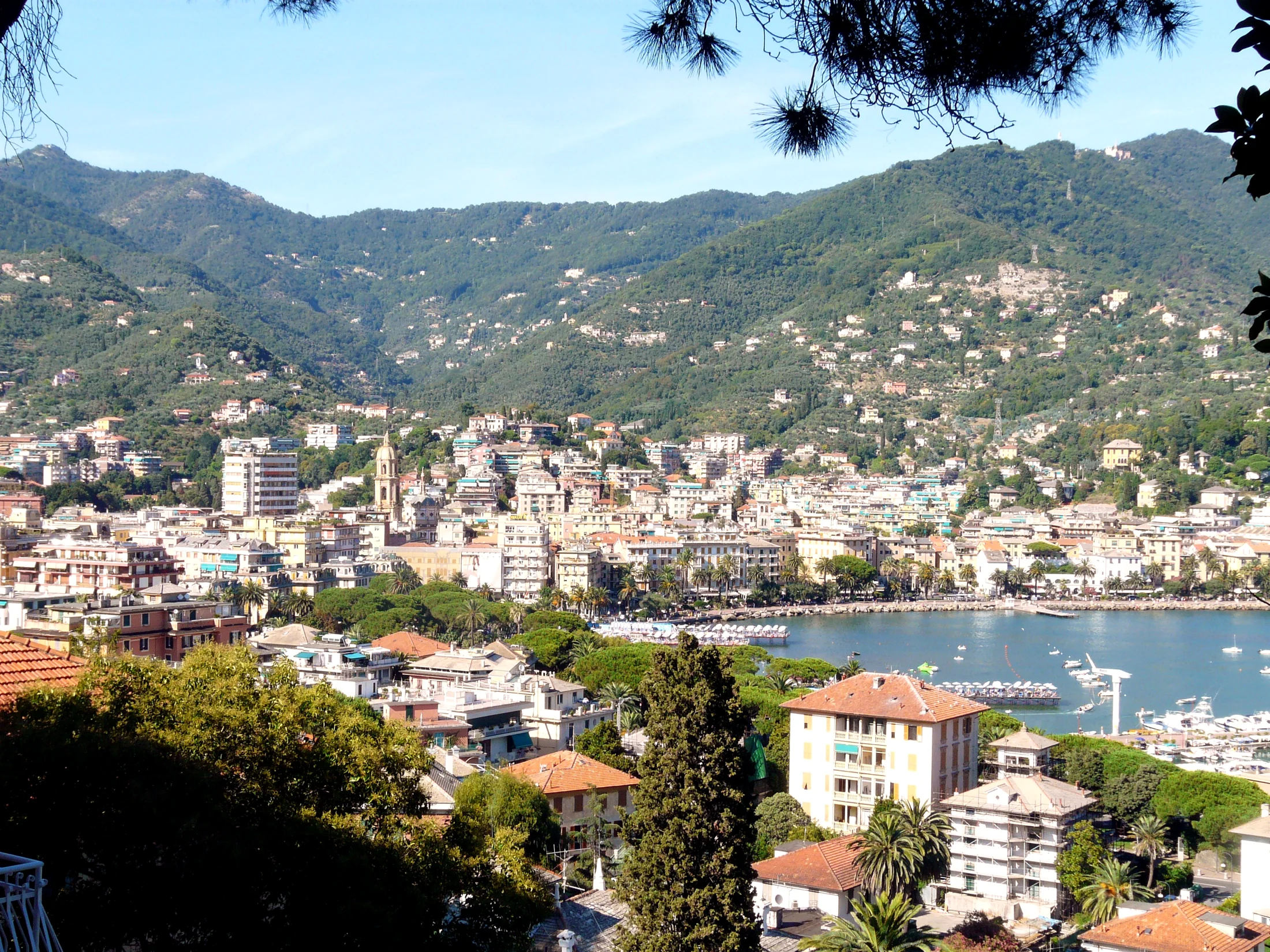
Rapallo works with children for an unromantic but decisive reason: it is flat. The seafront runs right along the water with no steps and no climbs, and from there you walk to the sea, the gardens and the centre. Anyone with a pushchair sees the difference at once compared with the villages around here, where everything is lovely and everything is uphill.
The other reason is that there is a cable car. And a cable car, when you are six, is not a means of transport: it is the outing.
The seafront, which is the backbone
Lungomare Vittorio Veneto is where you end up spending more time than you planned. It is flat and continuous, ending at one end in the castle area and at the other towards the harbour. You walk it in the evening with an ice cream, and it is the town's habit more than an attraction — but with children it is exactly what you need: a route where you do not have to grab a hand every two metres.
Along the promenade, towards villa Tigullio, there is the frog fountain, which gives its name to the small free beach beside it. It is the kind of detail children remember.
Parco Casale
This is where you go when the sea has worn everyone out, which happens sooner than you expect.
Inside there is a playground with slides, swings and a little castle, a small botanical garden, a big lawn good for football or a packed lunch, and — the thing that never fails — a historic locomotive. From up there you can see the Gulf of Tigullio.
The park also contains villa Tigullio, home to the bobbin lace museum. It is not an afternoon's visit with small children, but it is short, it is indoors, and with older children it has a point: bobbin lace is a local craft tradition, not a souvenir.
The cable car to Montallegro
It leaves from piazzale Federico Solari, in the centre, and climbs to the sanctuary of Nostra Signora di Montallegro on the hill behind the town. That is 600 metres of ascent in eight minutes, in two cabins holding 24 people. It is the only aerial cableway of its kind still working in Liguria.
Eight minutes is the right length: long enough to be an experience, not long enough to drag. On the way up you watch the gulf open out below, and at the top there is room to run and a view that explains the geography of the whole area in thirty seconds — Portofino on one side, the coast towards Sestri Levante on the other.
Times change with the season and the line closes for maintenance, usually in November and January: it is the one thing to check on the official site before setting off, because it is also the one thing that can wreck the plan.
The sea, and which beach
Rapallo's coast is not one single beach: the shore changes every few hundred metres, and with children you feel the difference.
- Le Saline is the natural choice with little ones: a shore of sand and fine gravel — the closest thing to sand the town has — and you reach it on foot from the seafront, with no steps.
- The free Castello beach has a natural sea-water pool sheltered by a mole and artificial rocks, built by the council with the Portofino Marine Protected Area. The water is sheltered: excellent for children who already swim, less so for those who play at the water's edge, because the bottom is rock.
- Le Rane is small and part paved, but it has a cold shower and a drinking fountain: as an hour's stop during a walk it is handy.
- Trelo and Prelo, at San Michele di Pagana, are lovely but small, and you get down to them by steps and lanes. With a pushchair they are awkward, and in August they fill up early.
The seafront clubs and the one at San Michele have the facilities that make a difference with children; prices and availability change every season and we do not print them, because they would be wrong within the year.
If it rains
The castle on the water hosts exhibitions, so it is worth checking what is on while you are there: it is a short visit, indoors, and the sixteenth-century fortress on a rock at the water's edge makes its impression from outside too.
Otherwise, the lace museum at villa Tigullio is the other indoor card. Rapallo is a town that lives all year round, so the shops and the places to sit down do not close in September: an advantage you do not notice until you need it.
How to fit it together
- Half a day: cable car up to Montallegro and back, then the seafront.
- A full day: morning at the sea at Le Saline, afternoon at Parco Casale, evening on the seafront.
- Two days: on the second, take the boat to Portofino or San Fruttuoso from the pier. Children like the crossing as much as the destination, and often more.
If you arrive by car, it is worth checking where to park first.
Frequently asked questions
Is Rapallo suitable for children?
Yes, above all because the seafront is flat and continuous: you get around on foot or with a pushchair without steps or climbs, and from the seafront you reach the sea, Parco Casale and the centre.
What is there at Parco Casale in Rapallo?
A playground with slides, swings and a little castle, a small botanical garden, a big lawn and a historic locomotive, with a view over the Gulf of Tigullio. The park also holds villa Tigullio, home of the bobbin lace museum.
Is the Rapallo cable car suitable for children?
It is one of the things they like most: an eight-minute climb of 600 metres, in cabins holding 24 people, up to the sanctuary of Montallegro. Times change with the season and the line closes for maintenance, usually in November and January.
Which is the best beach in Rapallo with children?
Le Saline, for its shore of sand and fine gravel and because you reach it on foot from the seafront with no steps. Trelo and Prelo are prettier but small, and you get down to them by steps and lanes.
What can you do in Rapallo with children when it rains?
The exhibitions in the castle on the water and the bobbin lace museum at villa Tigullio, inside Parco Casale. Both are short, indoor visits.