 Soggiorna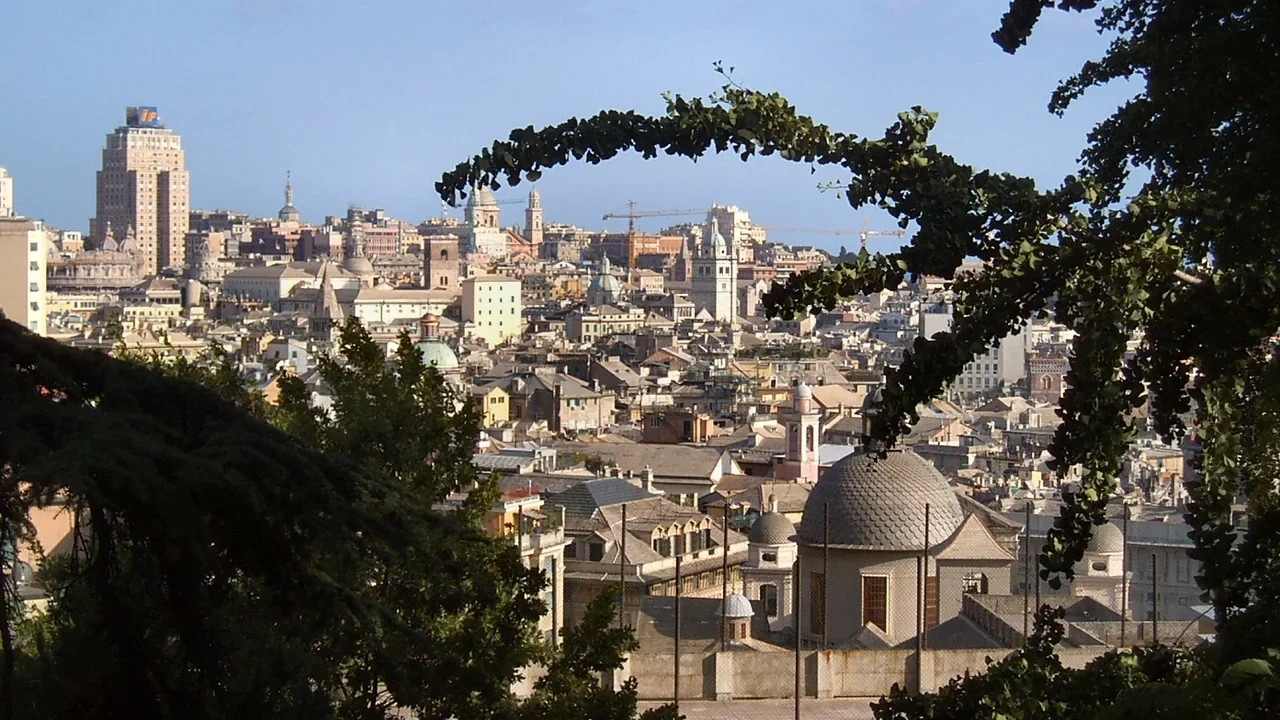
Visiting Liguria without a car is possible and, in many cases, even more convenient. The long and narrow shape of the region concentrates many locations along the coast, while the railway connects the main centers of Levante, Genoa, and Ponente. The real secret is not trying to see everything: it's choosing a suitable base, traveling light, and organizing the last few kilometers well.
This guide builds a simple journey between Genoa, Alassio, and Cervo, three very different but compatible destinations within the same itinerary. Genoa serves as an art city and railway hub; Alassio allows for a beach holiday with the station close to the center; Cervo offers the atmosphere of a historic village but requires a small additional transfer.
Why Liguria is suitable for a car-free trip
Along much of the Ligurian coast, train stations are located within or near urban centers. This makes the train a good choice for getting around between cities and seaside resorts without facing traffic, limited parking, and narrow roads.
However, there are three aspects to consider:
- not all locations have an active station;
- hilltop villages may have slopes, stairs, and uneven pavements;
- in summer and on weekends, public transport can be more crowded.
For a successful trip, it's advisable to alternate easily reachable destinations with a single stop that requires a bus or taxi. In our case, Genoa and Alassio are the most immediate bases; Cervo is the stop that requires more careful planning.
Arriving in Liguria by train
Genoa is the most practical entry point for those coming from Milan, Turin, Bologna, or other cities in Northern Italy. The two main stations for a visitor are Genoa Piazza Principe and Genoa Brignole.
Piazza Principe is convenient for the Porto Antico, the western historic center, and the Pré area. Brignole is useful for the modern center, via XX Settembre, the Foce area, and urban connections towards Levante. Before booking accommodation, check which station is closer: in Genoa, a short distance on the map can include significant climbs.
To continue towards Alassio and Ponente, you can take the coastal line trains heading to Savona, Imperia, Sanremo, or Ventimiglia. Schedules, stops, and travel times vary depending on the type of train and the period, so they should be checked for the actual travel date.
Getting around Genoa without a car
Genoa is not a completely flat city, but it has a well-developed network of buses, metro, elevators, and funiculars. In the historic center, many visits are done on foot; public transport becomes useful for reaching more distant neighborhoods or overcoming elevation changes.
For a first visit, you can organize yourself like this:
Historic center and Porto Antico on foot
From the Piazza Principe area, you can reach the Porto Antico and then enter the caruggi. Via San Lorenzo leads towards the cathedral and Piazza De Ferrari; from here, you can continue to via Garibaldi and the Palazzi dei Rolli.
The distances are not huge, but the historic center is a maze of alleys. It's useful to save the address of your accommodation and a nearby landmark, especially for the evening return.
Elevators and funiculars for panoramic viewpoints
The vertical transport systems are part of the urban transport network and help reach the hilly areas. The Spianata di Castelletto, for example, is one of the most accessible terraces to observe the rooftops of the center and the port from above.
Boccadasse and Corso Italia
For a seaside stroll, you can reach the Foce area and walk along Corso Italia towards Boccadasse, or use urban transport. The village is small and very busy on sunny days: arriving in the morning or late afternoon makes the visit more enjoyable.
Where to stay in Genoa without a car
The easiest areas for a first stay are those near Piazza Principe, Brignole, De Ferrari, or a metro stop. Before booking, always check:
- actual distance from the station;
- presence of stairs or slopes;
- elevator in the building;
- check-in time;
- possibility to leave luggage.
See the dedicated page for Genoa to compare the city with other destinations on the portal.
From Genoa to Alassio by train
Alassio is one of the most convenient locations in Ponente for those traveling without a car. The station is located near the center and allows you to reach the Budello, the Muretto, and the seafront on foot.
Once you arrive, most of your holiday can take place without other means:
- beach and seaside promenade;
- pedestrian historic center;
- shops and restaurants;
- Muretto di Alassio;
- short walks in the surroundings.
The city is simpler than Genoa in terms of daily movements. It is therefore a good base for families, couples, and travelers who want to alternate between the beach and walks without frequently changing locations.
Where to choose accommodation in Alassio
Proximity to the station is useful, but it's not the only criterion. Accommodation between the station, center, and sea allows for almost always walking. If the property is located on a hill, check the route in advance: some panoramic accommodations are less practical with luggage, strollers, or reduced mobility.
Check the destination Alassio for information and listings related to the area.
Reaching Cervo without a car
Cervo does not have a train station in the village. According to the Municipality's indications, you can get off at the Diano station and complete the journey, about four kilometers, by bus or taxi.
This is the stop that requires the most planning. Before departure, check:
- the train arrival time;
- the connection with the bus;
- the availability of taxis;
- the exact location of your accommodation;
- the amount of luggage to carry.
The historic village is perched and features alleys, steps, and climbs. For a day visit, it's advisable to leave luggage at the main base. To stay overnight in Cervo, however, it's better to ask the property for precise directions on the final stretch and any assistance with check-in.
Cervo as an excursion or as a base?
Cervo works well in both ways, but for different types of travelers.
Choose it as an excursion if you want to:
- see the village without changing hotels;
- travel with heavy luggage;
- keep Alassio or Genoa as your main base;
- have more freedom in the evening hours.
Choose it as a base if you are looking for:
- a cozy and quiet stay;
- a historic atmosphere;
- slow rhythms;
- accommodation with clear instructions for arrival and luggage.
You can find more information on the page for Cervo.
A practical five-day itinerary without a car
Days 1 and 2: Genoa
Arrive in Genoa, settle your luggage, and dedicate the first afternoon to the Porto Antico and the historic center. On the second day, visit via Garibaldi, the Palazzi dei Rolli, and a panoramic viewpoint; in the late afternoon, head to Corso Italia or Boccadasse.
Days 3 and 4: Alassio
Take a train to Alassio and choose accommodation reachable on foot from the station. Dedicate the first day to the center and the beach. The next day you can relax, stroll along the seafront, or plan a short excursion.
Day 5: Cervo
Travel to Diano and complete the transfer by bus or taxi. Visit the village at a leisurely pace, keeping in mind the climbs. If you need to leave on the same day, allow ample time for the return to the station.
Tickets, connections, and checks before departure
For regional trains, you can purchase tickets through official channels, at the station, or in digital format. Operational conditions may change, so always check the rules applicable to the chosen ticket, the correct station, and the updated schedule.
Before each move, save on your phone:
- train number;
- departure and arrival station;
- any changes;
- address of the accommodation;
- property number;
- alternative in case of delay.
For Cervo, also save the contact of a local taxi or ask your host directly.
Traveling with light luggage
In Liguria, a compact suitcase can make a big difference. Stairs, underpasses, narrow sidewalks, and alleys make very large luggage cumbersome.
A practical solution is to use:
- medium trolley or travel backpack;
- shoes with good grip;
- water bottle;
- lightweight windbreaker;
- waterproof case for documents and phone.
Those traveling with children should ask in advance if the property has an elevator and if the route from the station is stroller-friendly.
When it's still worth renting a car
Traveling without a car is ideal for Genoa, Alassio, and an organized visit to Cervo. A car becomes useful if you want to explore numerous inland villages in the same stay, reach isolated houses, or move frequently in the evening.
You don't have to choose a single solution for the entire vacation. You can arrive by train, stay several days without a car, and rent one only for a day in the countryside. This way, you avoid paying for parking and rental when they are not needed.
In summary
A holiday in Liguria without a car works well when based on a few logical stops. Genoa offers urban transport and cultural attractions; Alassio is easy to experience on foot; Cervo requires a final transfer but rewards with a compact and panoramic village.
The most useful rule is simple: book accommodations close to arrival points, check the last kilometers, and don't fill the schedule with movements. Liguria is best appreciated when there is time to walk, stop, and look at the sea.