 Soggiorna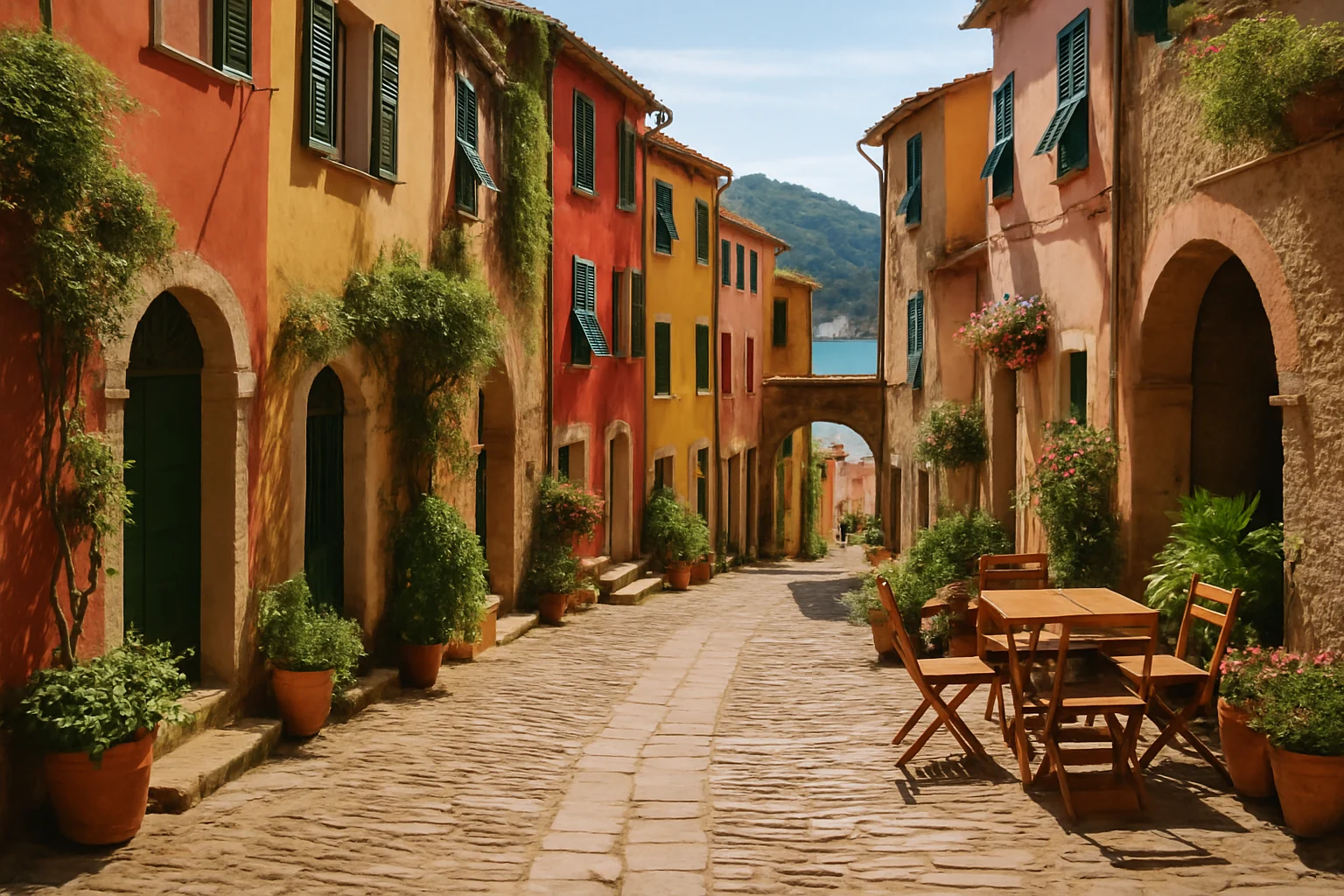
"The most beautiful" changes from person to person. What changes in concrete terms, and is worth knowing before you leave, is something else: how easy it is to get there, how much climbing and how many steps await you, and whether the village takes two hours to visit or deserves a longer stay.
Here you will find five Ligurian villages, all different from one another, with the practical side to the fore. They are the ones we already have a detailed, verified guide for: we would rather tell you properly about a few places than list twenty without telling you how to reach them.
In short: which one to choose
- Vernazza — Cinque Terre (SP). You arrive by train, the station is in the village. Bear in mind: heavy crowds in high season.
- Tellaro — Gulf of Poets (SP). No station, you come from Lerici. Bear in mind: steps and very narrow alleys.
- Cervo — Riviera dei Fiori (IM). Station about 4 km away, then bus or taxi. Bear in mind: the village is all uphill.
- Dolceacqua — Val Nervia (IM). Inland, no station. Bear in mind: vertical alleys and steps.
- Apricale — Val Nervia (IM). Inland, no station. Bear in mind: built on a slope.
Vernazza: the only one you really reach without a car
Vernazza is one of the five villages of the Cinque Terre and has a station on the coastal line: the train is normally the most practical way to move between the villages, and for Vernazza it is also the simplest way to arrive.
It is the right choice if you have no car or would rather not deal with parking. In exchange, it is also the busiest of the five listed here, especially in high season.
The National Park offers tourist cards which, depending on the version, include the trains along the line and access to the paying trails: prices and versions change from season to season, so they should be checked before you leave.
Tellaro: the village on the rocks, to be approached with respect
Tellaro is built on the rocks, with coloured houses, steps and narrow passages dropping towards the sea. It has no station: you reach it from Lerici, along the coast of the Gulf of Poets.
Two things to know beforehand: many of the lanes pass in front of the doors and windows of lived-in houses, so the visit calls for discretion; and do not expect a large town beach, because there is none.
It is the most rewarding village if you are after atmosphere and glimpses, the least suitable if you need easy routes.
→ Lerici and Tellaro: an itinerary in the Gulf of Poets
Cervo: beautiful, but all uphill
Cervo is a historic village that rises vertically above the Aurelia road. The old centre is not suited to ordinary traffic: you park in the lower part and walk up.
- By car: the municipality indicates the San Bartolomeo al Mare motorway exit, then the Aurelia towards Genoa. In high season the coastal traffic can slow you down.
- By train: the reference station indicated by the municipality is Diano, about four kilometres away, then bus or taxi. Check times and connections, especially in the evening.
- Luggage: if you are sleeping in the upper village, ask in advance how many steps there are and where a vehicle can legally stop.
Parking areas and rules change: it is best to ask your accommodation where to leave the car and how much height gain is left to cover on foot.
→ How to get to Cervo and where to park · Guide to Cervo
Dolceacqua: the bridge, the castle and the climb
Dolceacqua lies inland in western Liguria, in Val Nervia. The stone bridge over the Nervia stream links the modern part to the historic core dominated by the Doria Castle, and is tied to the paintings Claude Monet made during his stay in the area.
The old village develops vertically: arches, passageways and steps. Some stretches can be slippery in the rain, so in uncertain weather proper shoes are needed.
Opening times, tickets and events at the castle should be checked against official information: an event taking place can change access and routes.
The valley is associated with Rossese di Dolceacqua, the local DOC wine: tastings take place at authorised producers and operators, and anyone driving should plan accordingly.
→ Dolceacqua and Val Nervia: villages, castle and Monet's bridge
Apricale: stone on the slope
Apricale is built on the slope, entirely in stone, with a square, alleys, the Castello della Lucertola and artworks spread through the village: an atmosphere different from Dolceacqua, even though the two places are close to each other.
They can be visited on the same day by car, but it is better not to add too many other stops: both are villages to be walked, and uphill.
In the same valley there is also Pigna, known for the church of San Michele Arcangelo and for the local white bean.
When to go
There is no single "right" season for everyone:
- Spring and early autumn are the easiest times for the uphill villages (Cervo, Dolceacqua, Apricale): less heat during the climbs and fewer people.
- Summer makes sense if the sea is part of the trip, but allow for coastal traffic and harder parking.
- In the rain the stone alleys become slippery: in that case Vernazza and Lerici, better served, are a simpler fallback than the inland villages.
What to check before you leave
This information changes from season to season and we do not present it as fixed:
- opening times and tickets for castles, churches and museums;
- prices and versions of the Cinque Terre National Park tourist cards;
- parking areas, rules and costs;
- train and bus times and connections, especially in the evening;
- the real accessibility of the routes, if you are travelling with a pushchair or have mobility difficulties: almost all of these villages have steps and gradients, and "accessible" has to be checked case by case, not taken for granted.