 Soggiorna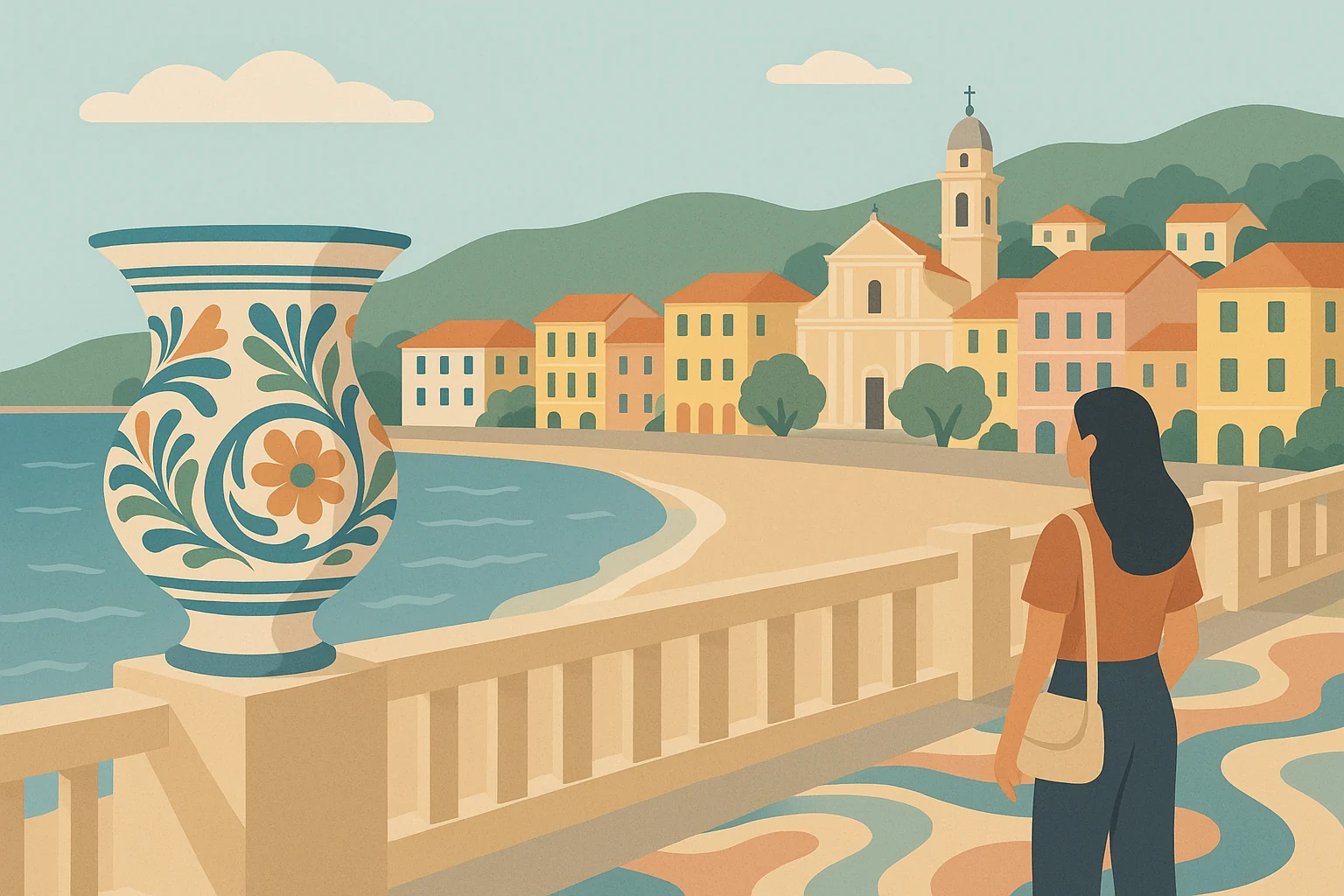
The city of ceramics
Albisola — divided into the two municipalities of Albisola Superiore and Albissola Marina — has been one of the most important Italian centers for the production of artistic ceramics for centuries, a tradition that dates back at least to the 1500s and that in the 20th century attracted international artists such as Lucio Fontana, Asger Jorn, and Wifredo Lam, drawn by the local kilns. Even today, the artisan workshops throughout the town produce and sell hand-painted ceramics.
What to see
The Casa Museo Jorn, housed in the residence and garden that Danish artist Asger Jorn transformed into a total work of art with mosaics and ceramic sculptures, is the most unique stop for those wanting to understand the connection between Albisola and the art of the late 20th century. The seafront, decorated in some sections with ceramic panels and installations, reflects the same artisanal vocation of the entire town.
The historic center of Albisola Superiore preserves the Faraggiana villa, an 18th-century noble residence with an Italian garden, while Albissola Marina develops around the small harbor and the seaside promenade.
Beaches and seaside life
The coastline offers both beach establishments and free stretches, continuing with the beaches of Savona to the west and Celle Ligure to the east: a convenient base for those who want to alternate between the sea and artisan visits without moving too far.
How to get there
Albisola is served by its own train station on the Genoa–Ventimiglia line, with frequent regional connections to Savona and Genoa.
Before you go
How long you need. Half a day is enough for the seafront and a few workshops; a full day if you want to add the Casa Museo Jorn and Villa Faraggiana without rushing.
When to go. Being a seaside town, in summer it is in the middle of the bathing season, with more crowds and harder parking. For the workshops and the museums, spring and autumn are quieter.
Accessibility. The seafront and the promenade are flat and easy. The Casa Museo Jorn, by contrast, is set in a house with a sloping garden: if you have accessibility needs, check in advance how the visit is organised.
If it rains. It is one of the few coastal places where rain does not ruin the day: workshops, museums and Villa Faraggiana are all indoors.
To check before you leave: opening times of the Casa Museo Jorn and Villa Faraggiana, which change with the season; opening days and hours of the artisan workshops, which as private businesses do not follow a single calendar; if you are looking for a class or a demonstration, it is best to contact the workshop directly.