 Soggiorna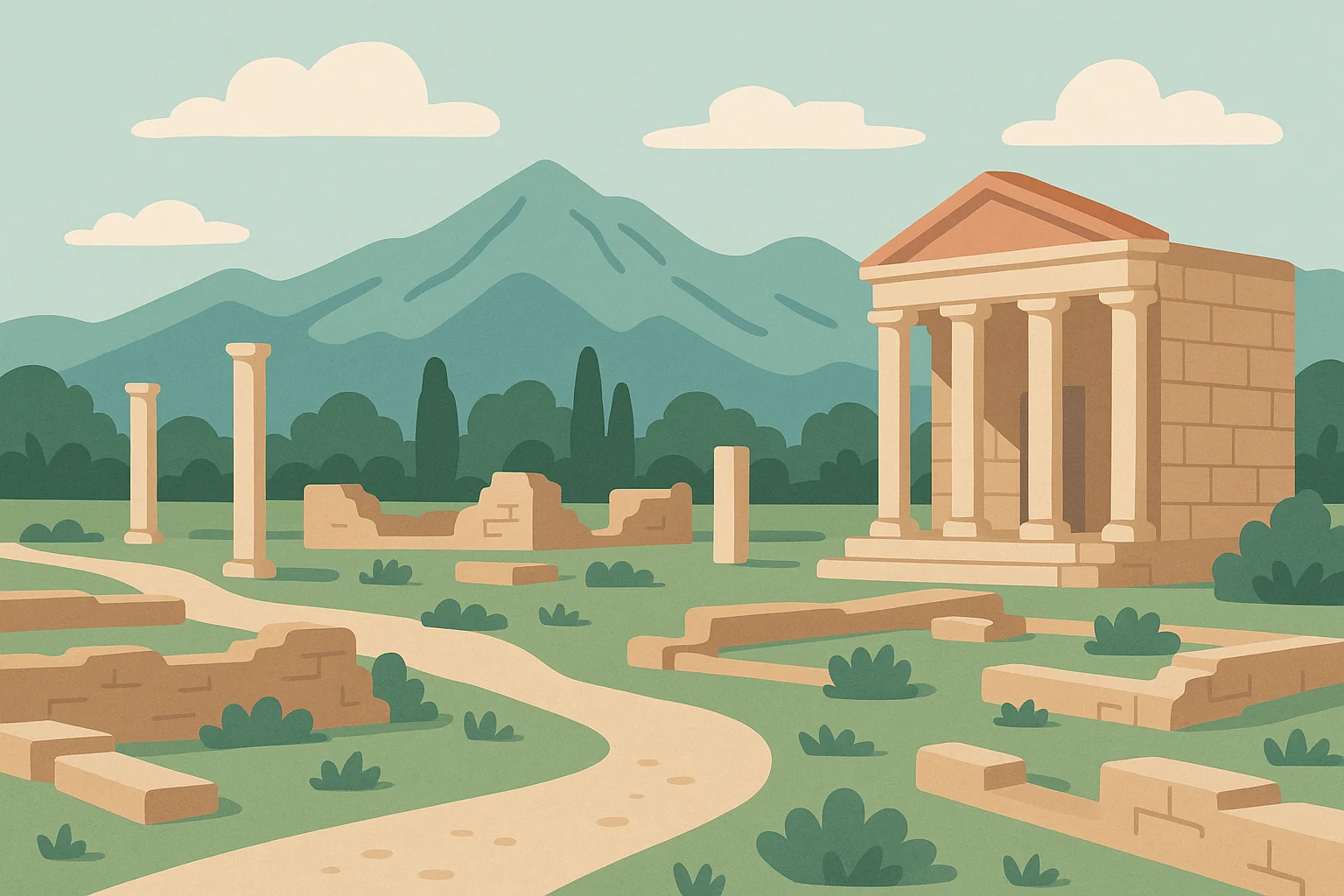
An ancient Roman colony on the coast
Luni was founded by the Romans in the 2nd century BC as a colony and port, and it gives its historical name to the entire region of Lunigiana. The site, now a few kilometers from the current coastline due to the silting of the mouth of the Magra River over the centuries, preserves one of the most important Roman archaeological complexes in Liguria, managed as a visitable archaeological park.
The excavations and the museum
The archaeological area includes the remains of the forum, the capitolium, some domus with mosaics, and, above all, a well-preserved amphitheater, originally capable of hosting several thousand spectators: one of the most legible Roman structures in Liguria. The National Archaeological Museum of Luni, at the entrance of the park, displays the most significant finds from the excavations, from sculptures to everyday life materials.
A border territory
Luni is located in the far eastern part of Liguria, almost on the border with Tuscany, in a flat area different from the rest of the Ligurian coast, historically a transit land between the two regions: a good starting point for those visiting the nearby Val di Magra or Versilia.
How to get there
The site can be reached by car or bus from La Spezia and Sarzana; the nearest train station is Luni-Ortonovo/Sarzana, on the line connecting La Spezia to Tuscany.
Before you go
How long you need. About two hours to see both the archaeological area and the museum without rushing. The amphitheatre lies in a separate area from the forum: allow for that in your route.
When to go. It is an open-air site on flat ground, so almost entirely without shade: in high summer, early morning or late afternoon is far better. Spring and autumn are the best seasons.
Accessibility. The ground of the archaeological area is natural and uneven, with stretches of gravel and grass: closed shoes are needed, and with a pushchair or limited mobility it is worth asking in advance which paths are usable. The museum, by contrast, is an enclosed building and easier to visit.
If it rains. The open-air excavations become hard to enjoy and the ground turns muddy; the national archaeological museum, however, stays visitable and is the indoor part of the visit.
To check before you leave: opening times, closing days and tickets for the archaeological area and the museum, which follow seasonal calendars and may differ from each other; bus connections from Sarzana and La Spezia, which can be reduced on public holidays.